You have a packaging line to equip—or perhaps you are expanding your finishing department to bring hot stamping in-house. Luxury boxes, premium book covers, cosmetic cartons, and high-end labels all demand the distinctive metallic finish that only hot foil stamping delivers. But the machine that produces that finish can look very different depending on your production reality.
One shop runs a fully automatic hot stamping press that integrates foil stamping and die cutting in a single pass, outputting 7,500 sheets per hour. Another operates a manual machine, feeding each sheet by hand, running short batches of custom leather journals and specialty packaging at 23 strokes per minute. Both are hot stamping. Both produce beautiful results. But they serve completely different production profiles.
This article compares automatic and manual hot stamping machines across the dimensions that actually matter: speed, precision, material flexibility, labor requirements, and total cost of ownership. The goal is not to declare one “better”—but to help you match the technology to your actual production needs.
Before comparing machine types, it helps to understand what hot stamping actually accomplishes and why it has become indispensable in premium packaging.
Hot foil stamping is a thermal transfer process. A heated die—typically made of brass, copper, or magnesium—presses against a carrier film coated with a metallic or pigmented foil. Heat and pressure activate the foil’s adhesive layer, transferring the design onto the substrate surface. The result is a durable, metallic, or pigmented finish that cannot be achieved with conventional printing.
The process involves three critical variables:
Temperature: Typically 80–200°C, depending on the substrate and foil type
Pressure: Sufficient to transfer the foil without crushing the substrate
Dwell time: The duration the heated die remains in contact with the foil and substrate
In premium packaging applications—cosmetic boxes, luxury gift packaging, wine cartons, and high-end book covers—hot stamping provides the visual and tactile distinction that signals quality. For many brands, the metallic foil finish is not optional; it is the defining characteristic of their packaging identity.
What this means for your production: Hot stamping is not a generic process. Different substrates (paper, board, leather, plastic) and different foil types require different temperature and pressure combinations. The machine you choose must offer sufficient control over these variables to handle your specific material mix.
Automatic hot stamping machines are designed for one primary purpose: high-volume, consistent production with minimal operator intervention.
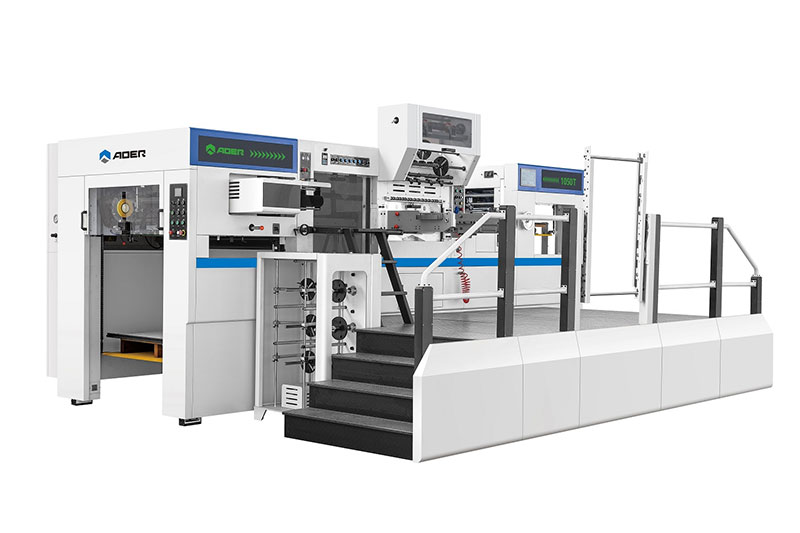
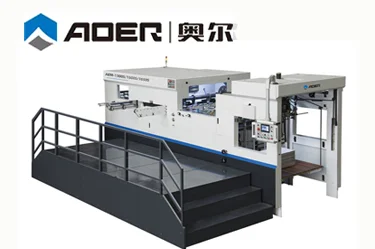
AOER’s automatic hot stamping machines combine hot stamping and die-cutting functionalities in an integrated platform, enabling multi-process processing in a single pass. This integration significantly enhances equipment utilization while reducing investment and floor space costs.
Key features include:
| Feature | Specification | What It Means for Production |
| Speed | 7,000–7,500 sheets per hour | Large-scale production without bottlenecks |
| Temperature control | Eight-zone independent system | Zone-specific constant temperature adjustment; high efficiency and energy savings |
| Precision | Precise stepping function | Accurate positioning for each stamping operation |
| Safety | Electrical components comply with European and American safety standards | Safe operation in global production environments |
| Integration | Hot stamping + die cutting in one machine | 40% increase in equipment utilization; 35% reduction in investment and floor space costs |
The AEM-1050T model, for example, delivers high-speed output up to 7,500 sheets per hour, making it suitable for high-end packaging, cosmetic boxes, and luxury goods production lines.
Automatic hot stamping machines are the right choice when:
Batch sizes consistently exceed 5,000 sheets—the setup time (typically 20–40 minutes) is amortized across a long run
Production volume justifies the investment—automatic machines represent a significant capital expenditure
Consistency is non-negotiable—automation eliminates the variability that comes with manual operation
Integration with other finishing processes (die cutting, creasing) creates workflow efficiencies
Labor costs are high—reducing operator intervention directly improves margins
Automation comes with trade-offs:
Higher initial investment—automatic machines cost significantly more than manual equivalents
Longer setup time—feeder calibration, temperature stabilization, and registration adjustments require more time
Higher skill requirements—operators must understand both the machine and the automation systems
Less flexibility for short runs—the setup overhead makes small batches uneconomical
What this means for your decision: An automatic machine is not simply a faster version of a manual machine. It is a different operating model that requires different planning, different operator skills, and a different production schedule. It excels at long runs of consistent designs. It struggles with frequent changeovers and tiny batches.
For production environments where volume justifies automation, reviewing the specific capabilities of integrated hot stamping and die cutting systems helps narrow down the right configuration: examine automatic hot stamping machine configurations for high-volume production.
Manual hot stamping machines occupy a different space in the production landscape. They are not “lesser” machines—they are different tools for different jobs.
Manual hot stamping machines are precision thermal transfer equipment designed for applications where operator control and material flexibility matter more than raw speed.
Key features include:
| Feature | Specification | What It Means for Production |
| Temperature control | PID technology, ±1°C accuracy | Consistent results across batches; eliminates uneven stamping caused by temperature fluctuations |
| Temperature range | 80–200°C adjustable | Multi-material processing capability |
| Display | LED digital display for real-time monitoring | Immediate visibility into process parameters |
| Structure | Heavy-duty steel frame and reinforced casting | Low vibration; long-term accuracy |
| Speed | 16–26 strokes per minute | Suitable for small and medium-sized enterprises |
| Material compatibility | Thin paper, cardstock, leather, thin plastic | Wide applicability across different substrates |
The TYMA series offers a range of models from the TYMA-750 (750×520mm sheet size, 26±2 strokes/min) to the TYMA-1400 (1300×920mm, 16±2 strokes/min), accommodating different production scales and sheet sizes.
Manual hot stamping machines are the right choice when:
Batch sizes are small (under 2,000 sheets)—setup time is minimal, and each job can be completed quickly
Designs change frequently—manual changeover is faster and simpler
Material variety is high—operators can adjust temperature, pressure, and dwell time on the fly based on material behavior
The operation is prototyping or sampling—manual machines allow quick iteration without production-scale setup
Capital is limited—manual machines represent a lower initial investment
Labor is available and cost-effective—the manual operation model works where labor costs are manageable
Manual operation comes with its own constraints:
Lower throughput—26 strokes per minute is approximately 1,500 sheets per hour, a fraction of automatic speeds
Operator fatigue—sustained manual feeding is physically demanding
Consistency variability—results depend on operator attention and skill
Scale limitations—growing beyond a certain volume requires adding shifts or additional machines
What this means for your decision: A manual machine is not a compromise—it is the correct choice for a specific production profile. If your business is built on short runs, custom orders, and material variety, a manual machine may be more profitable than an automatic one, despite the lower speed.
For operations where flexibility and short-run capability are priorities, understanding the specific capabilities of manual hot stamping machines helps when comparing models: review manual hot stamping machine specifications for flexible production.
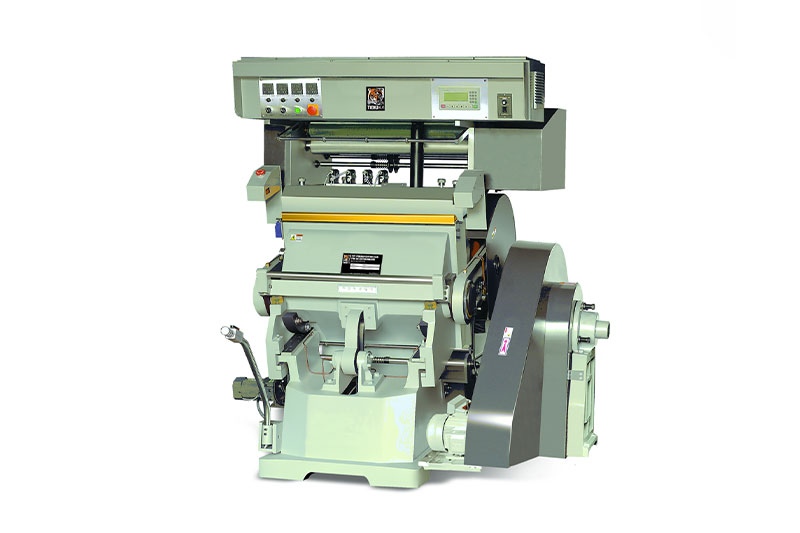
| Factor | Automatic Hot Stamping | Manual Hot Stamping |
| Typical speed | 7,000–7,500 sheets/hour | 16–26 strokes/min (approx. 1,000–1,500 sheets/hour) |
| Temperature control | Eight-zone independent system | PID ±1°C accuracy |
| Integration | Hot stamping + die cutting in one pass | Standalone stamping; separate die cutting required |
| Sheet size range | 800×620 mm to 1670×1210 mm | 750×520 mm to 1300×920 mm |
| Best batch size | Over 5,000 sheets | Under 2,000 sheets |
| Setup time | 20–40 minutes | 10–15 minutes |
| Operator requirement | One skilled operator (monitoring) | One operator (continuous feeding) |
| Investment level | High | Low to moderate |
| Material flexibility | Good (within feeder capabilities) | Excellent (operator can adjust on the fly) |
| Typical applications | High-end packaging, cosmetic boxes, luxury goods | Small and medium enterprises, personal studios, prototyping |
Hot stamping machines, regardless of automation level, are subject to safety regulations that affect both design and operation.
ISO 12643-5:2023 provides additional safety requirements for the design and construction of manually-fed or automatic stand-alone platen presses intended for die cutting, creasing, embossing, and foil stamping of paper, board, and other materials. This standard addresses guarding, two-hand controls, and pressure system integrity.
For foil adhesion quality, ASTM D3359 (Standard Test Methods for Rating Adhesion by Tape Test) provides a standardized method for evaluating foil adhesion. A Dyne count of 38 or higher is generally required for hot-stamping foil to adhere properly to the substrate surface.
Practical implication: When evaluating machines, look for compliance marks indicating adherence to ISO 12643-5. A machine that meets this standard has undergone design review for safety-critical systems, reducing the risk of operator injuries during both normal operation and maintenance. Similarly, understanding ASTM D3359 helps establish objective quality criteria for foil adhesion, removing subjectivity from quality decisions.
A packaging manufacturer produces 500,000 cosmetic cartons monthly across three standard sizes. Each carton requires gold foil stamping on the front panel. Batch sizes average 30,000 sheets per design.
The choice: Automatic hot stamping machine.
Why: The volume justifies the investment. The AEM-1050T’s 7,500 sheets/hour output means a 30,000-sheet run completes in approximately four hours. The integrated die cutting and stamping eliminates a separate finishing step. The eight-zone temperature control ensures consistent results across the entire run. The per-sheet cost is dramatically lower than manual operation.
A small studio produces custom rigid boxes, wedding invitation suites, and specialty packaging. Each order is unique—50 to 500 pieces, different sizes, different substrates, different foil colors. They run 15 different jobs in a typical week.
The choice: Manual hot stamping machine.
Why: An automatic machine would spend more time in setup than in production. The manual machine’s 10–15 minute changeover means they can switch between jobs quickly. The PID temperature control (±1°C accuracy) ensures consistent results even with frequent temperature changes between materials. The lower investment leaves capital available for other equipment. The operator’s ability to adjust pressure and dwell time on the fly accommodates the material variety that defines their business.
A mid-size commercial printer currently runs 80% of its hot stamping on a manual machine. But one client’s volume has grown—now 15,000 sheets per month of a single book cover design.
The choice: Both—keep the manual machine for the 80% of jobs that remain short-run, add an automatic machine for the high-volume client and future growth.
Why: The mixed approach is common in shops that have outgrown manual-only but still serve a diverse customer base. The manual machine handles flexibility; the automatic machine handles volume. Neither replaces the other.
For shops with mixed production profiles, understanding how different machine configurations fit into the overall workflow helps when planning capacity expansion: explore finishing solutions for mixed-volume production environments.
You now have a framework for comparing automatic and manual hot stamping machines based on your actual production profile.
| If your production is characterized by… | Your primary focus should be… |
| Batch sizes consistently over 5,000 sheets | Automatic—speed and consistency justify the investment |
| Batch sizes under 2,000 sheets, frequent changeovers | Manual—flexibility and short setup time are more valuable |
| High material variety | Manual—operator adjustability accommodates variation |
| Consistent materials, long runs | Automatic—once set, it runs consistently |
| Integration with die cutting | Automatic—integrated machines reduce handling |
| Limited capital or growing gradually | Manual—lower entry point; can add automation later |
The most common mistake is assuming that automatic is always an “upgrade.” It is not—it is a different operating model that works best when batch sizes, material consistency, and production volume align. When they do not align, a manual machine is not a compromise; it is the correct engineering solution for that specific production environment.
Once you have clarified your typical batch sizes, material mix, and production volume, comparing specific machine configurations becomes the logical next step. Different models within each category offer different strengths: some prioritize maximum speed; others focus on larger sheet sizes or enhanced temperature control. The right choice depends on your specific requirements.
5 Tips to Choose a Die Cutting Machine
Die Cutting Pressure & Stripping Force Explained
Book Cover Creasing & Foiling with One Machine
How a Die Cutting Machine Works Step by Step
Five Signs Your Post-Press Line Needs a Feeder Upgrade
GET A QUOTE


 中文
中文 English
 Pусский
 Français
 Español