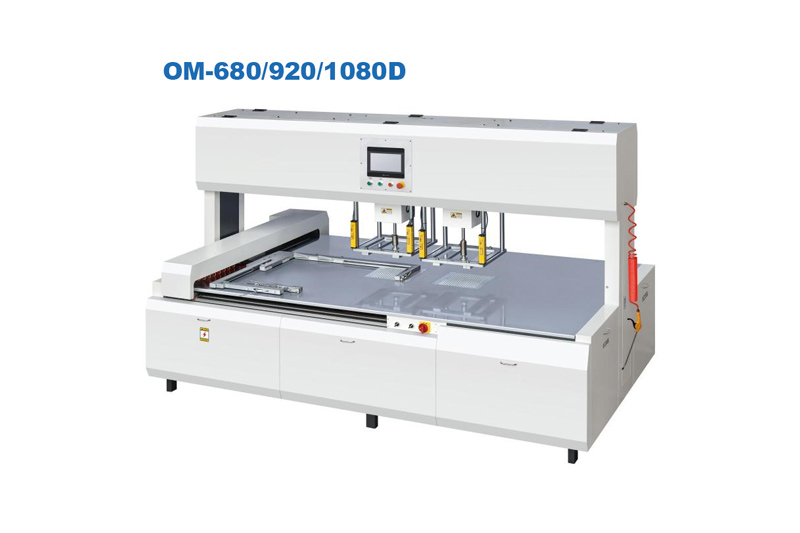
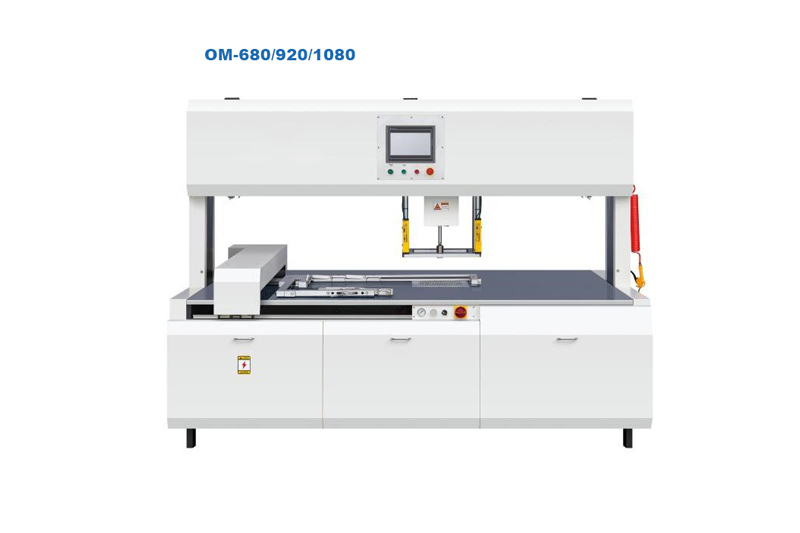
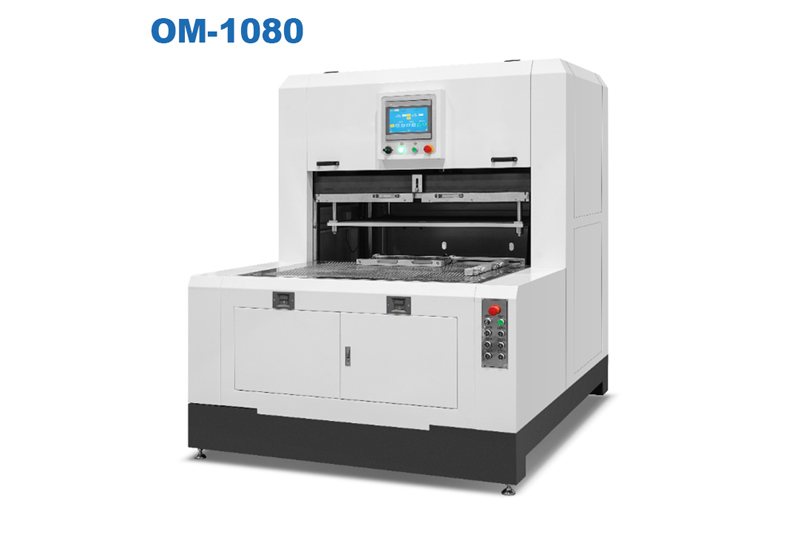
You have decided to invest in an automatic die cutting machine. Perhaps your manual press can no longer keep up with growing order volumes. Perhaps you are tired of turning down jobs of over 5,000 pieces because you simply cannot compete on those runs. Or perhaps you are setting up a new finishing line and want to get the equipment choice right the first time.
Whatever your situation, the machine selection process can feel overwhelming. Dozens of models, conflicting opinions, and specifications that blur together. But here is the truth: choosing a die cutting machine is not about finding the “best” machine. It is about finding the right machine for your specific production reality.
This guide walks through five practical decision factors that separate a smart purchase from an expensive mistake—based on your materials, your volume, and your workflow.
The most common mistake buyers make is shopping on speed specs alone. A machine rated for 7,500 sheets per hour is irrelevant if your average batch is 500 sheets and you spend more time setting up than cutting.
Before looking at any specification sheet, ask yourself: What is my typical batch size?
| Batch Size Profile | Recommended Approach | Why |
| Under 2,000 sheets | Manual press | Setup takes 10–15 minutes; automatic’s 20–30 minute setup eats any speed advantage |
| 2,000–5,000 sheets | Either—depends on frequency | Evaluate how often you run batches in this range |
| Over 5,000 sheets | Automatic strongly preferred | Automation shines; consistent 5,000–7,500 sheets/hour |
A manual press with a 10–15 minute setup makes perfect sense when you run 15 different carton sizes in a single shift. An automatic machine, once set up, runs consistently at high speed. A motor does not get tired—pressure stays consistent on sheet #4,000 just as it was on sheet #1.
If you are currently running 2,000–3,000 sheet batches but expect volume to grow, consider whether you can start with a manual machine and add automation later, or whether buying an automatic machine now—and running it below capacity for a period—makes more financial sense. There is no universal answer; it depends on your growth trajectory and cash flow.
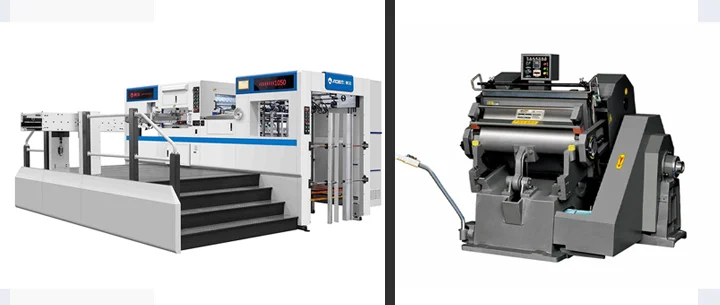
If you want to compare manual and auto feeding modes for different production batches, browse our manual die cutting machine and automatic die cutting machine series to check their actual performance in real manufacturing scenarios.
The second most common mistake is starting with machine specifications rather than materials. What are you actually cutting?
Automatic die cutting machines can handle a wide range of materials—paper, leather, cardboard, corrugated paper, and plastic sheet. But not every machine handles every material equally.
| Material Type | Key Consideration |
| Thin paper (under 200 gsm) | Requires gentle feeding to avoid tearing |
| Paperboard (200–600 gsm) | Standard application for most flatbed machines |
| Thick cardboard/greyboard (600+ gsm) | Needs higher pressure capacity (e.g., 200+ tons) |
| Corrugated board | May require specialized lead edge, feeders |
| Plastic sheet/film | Requires appropriate die types and pressure control |
AOER’s automatic die cutting machines, for example, handle sheet sizes from 820×620 mm to 1670×1210 mm, with speeds ranging from 3,000 to 8,000 sheets per hour. The mainframe and base use high strength spheroidal graphite iron QT500-7, accurately processed by numerical control center, guaranteeing stable operation when bearing large pressure.
If you regularly process thick cardboard or multiple layers, pressure capacity becomes critical. Some models offer maximum die-cutting pressure of 200 tons or more, enabling clean cutting of materials up to 7mm thick. The core components—crankshaft, worm gear—are imported high-class alloy steel, processed by quenching and high temperature tempering for long working life.
What this means for your decision: A machine that cuts 400 gsm paperboard beautifully may struggle with 2mm greyboard. If your material mix is varied, look for machines with adjustable pressure settings and multiple operating modes.
Automatic die cutting machines come in two primary configurations: flatbed and rotary. Each serves a different production profile.
Flatbed machines consist of a flat bed where material is placed and a flat platen that holds the die. The platen moves down onto the material, applying pressure to cut it.
| Feature | Flatbed |
| Cutting action | Reciprocating (press down, lift up) |
| Versatility | High—handles wide range of materials and thicknesses |
| Best for | Small-to-medium production runs, custom shapes, varied materials |
Rotary machines use a cylindrical die that rotates against a rubber-covered roller. As material is fed between the rotating die and the roller, it is continuously cut.
| Feature | Rotary |
| Cutting action | Continuous rotation |
| Versatility | Limited—best for thin, flexible materials |
| Best for | Long runs, labels, flexible packaging, high-speed production lines |
What this means for your decision: If your work includes thick cardboard, varied materials, or frequent design changes, flatbed is likely the right choice. If you produce millions of labels or flexible packaging continuously, rotary may be more efficient.
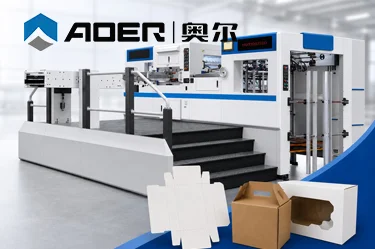
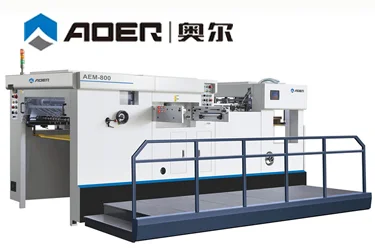
AOER offers a comprehensive range of flatbed machines, with models from AEM-800(Q) to AEM-1650S(Q). The AEMG series includes heavy-duty automatic flatbed die cutting machines designed for continuous industrial operation and mass production of standard packaging.
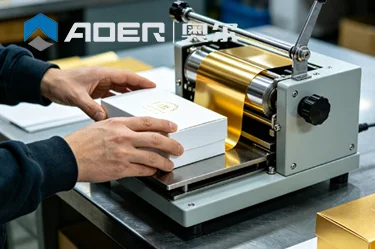
For packaging plants processing diverse paper, cardboard, and holographic foil materials with fluctuating order batch sizes, matching properly sized hot foil stamping machines and automatic die cutting machine configurations with your complete production workflow simplifies capacity planning for mixed-material packaging runs. Explore our custom finishing equipment for multi-material packaging production workflows via AOER tailored packaging solutions.
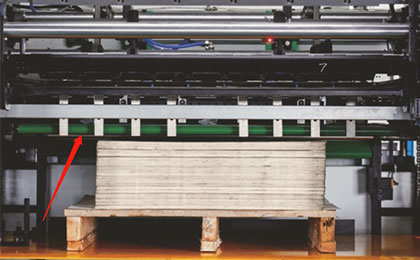
The feeder is often the overlooked component—but it determines whether your machine runs smoothly or becomes a constant source of jams and downtime.
| Feeder Type | How It Works | Best For |
| Top suction feeder | Suction nozzles lift the top sheet from a stack | Thin to medium board, mixed materials |
| Lead edge feeder | Gripper system grabs the leading edge of each sheet | Thick paperboard, corrugated board |
| Manual-automatic dual-use | Operator can feed by hand while lifting the feeder head up | Papers that cannot be fed automatically due to poor quality or shape |
Inconsistent feeding leads to misregistration, wasted material, and rejected products
Double-sheet feeding jams the machine and damages the die
Manual feeding limits throughput but offers maximum control for tricky materials
AOER’s automatic machines feature precision feeder heads with adjustable suction and feed nozzles—the angle and height can be adjusted to suit different shapes of paper. The conveyor table uses anti-wear PU press rollers and brush wheels to guarantee high feeding accuracy; the conveyor belt can be adjusted nonstop.
Modern automatic feeders incorporate sensors that detect problems before they reach the cutting station. Skew paper and accumulated paper detection with auto stop function means when sensors detect paper is skewed or accumulated before being delivered to the platen press section, the machine will stop automatically.
What this means for your decision: A machine with excellent cutting capability but a poor feeder will still create production headaches. If you run multiple material types, look for feeders with adjustable nozzles and multiple feeding modes. If you primarily run corrugated or thick board, a lead edge feeder is often the better choice.
Price is what you pay—but total cost of ownership (TCO) is what you actually spend. This includes downtime, maintenance, spare parts, energy consumption, training, and safety compliance.
Die cutting machines are powerful equipment with significant safety risks. Look for machines that comply with recognized safety standards.
ISO 12643-4 provides safety requirements for the design and construction of converting equipment used in the package printing, converting, and graphic technology industries. This standard covers automatic flatbed die-cutting machines and other converting equipment.
AOER’s automatic die cutting machines are designed in accordance with European safety standards, combining operability and safety. Features include:
Advanced alarm system that reminds operators to leave unsafe areas before startup
Automatic detection of malfunctions—if paper is stuck or missing, the pneumatic clutch separates and stops automatically, reducing waste and protecting staff and equipment
Selected European, Japanese, and Taiwanese electrical and pneumatic components to improve stability
A professional evaluation of the die cutting machine cost includes maintenance costs, spare parts, energy consumption, and expected service life. Lower-priced machines may incur higher downtime, blade wear, or recalibration frequency. Premium models deliver ROI through reduced labor, fewer rejects, and longer service life.
AOER’s automatic machines, for example, can reduce energy consumption by 30% compared to traditional models and keep waste rates below 0.5% (industry average is 2%). The machines feature automatic feeding, conveying, and die-cutting of cardboard through automatic conveying devices and intelligent control systems, which reduces labor costs.
Consider:
Warranty coverage: AOER offers long-term comprehensive technical training and one year of timely, free maintenance
Spare parts availability: How quickly can you get replacement parts?
Technical support: Is remote troubleshooting available?
Training: Does the supplier provide operator training?
The die-cutting machine market is experiencing robust growth. The global die cutting machine market was estimated at USD 1,611.3 million in 2025 and is projected to reach USD 2,394.4 million by 2033, growing at a CAGR of 5.3%. Rising demand for advanced packaging solutions across e-commerce, food & beverage, and consumer goods sectors is a major factor driving this growth. The packaging industry accounted for a 25% share in 2025, generating USD 500 million.
What this means for your decision: Investing in the right automatic die cutting machine is not just about meeting current production needs—it is about positioning your business to capture growth in an expanding market.
External reference: According to market research, automatic die-cutting machines offer significant advantages in speed, precision, and productivity. Their ability to minimize manual intervention and ensure consistent output makes them highly sought after, particularly in high-volume industries like packaging, automotive, and electronics.
For shops that have identified their production profile, reviewing specific machine configurations helps narrow down the right option: review die cutting machine configurations across different series.
You now have five practical factors to guide your automatic die cutting machine purchase:
Match the machine to your production volume—manual for short runs, automatic for long runs
Understand your material requirements—thickness, type, and pressure needs
Compare flatbed vs. rotary—based on your workflow and material variety
Evaluate feeder technology—for reliable, consistent material handling
Look beyond price—consider safety, support, and total cost of ownership
| If your production is characterized by… | Your primary focus should be… |
| Batch sizes consistently over 5,000 sheets | Automatic flatbed with high-speed capability |
| Thick cardboard, greyboard, or corrugated | Lead edge feeder; high pressure capacity (200+ tons) |
| Mixed materials and frequent design changes | Versatile flatbed with adjustable feeder |
| High volume, thin materials, labels | Consider rotary die cutting |
| Safety and compliance as priority | Machines meeting ISO 12643 and European safety standards |
The most common mistake is assuming that automation is always an “upgrade.” It is not—it is a different operating model that works best when batch sizes, material consistency, and production volume align. When they do not align, a well-chosen manual machine is not a compromise; it is the correct engineering solution for that specific production environment.
Once you have clarified your typical batch sizes, material mix, and production volume, comparing specific machine configurations becomes the logical next step. Different models within each category offer different strengths: some prioritize maximum speed; others focus on larger sheet sizes or enhanced temperature control. The right choice depends on your specific requirements.
How to Calculate the ROI of an Automatic Die Cutting Machine
How Feeder Type Selection Affects Production Efficiency
Automation Trends in Post-Press Packaging Equipment for 2026
How to Evaluate After-Sales Support from Die Cutting Machine Manufacturers
Common Pitfalls in Automatic Die Cutting Machine Installation and Commissioning
GET A QUOTE


 中文
中文 English
 Pусский
 Français
 Español