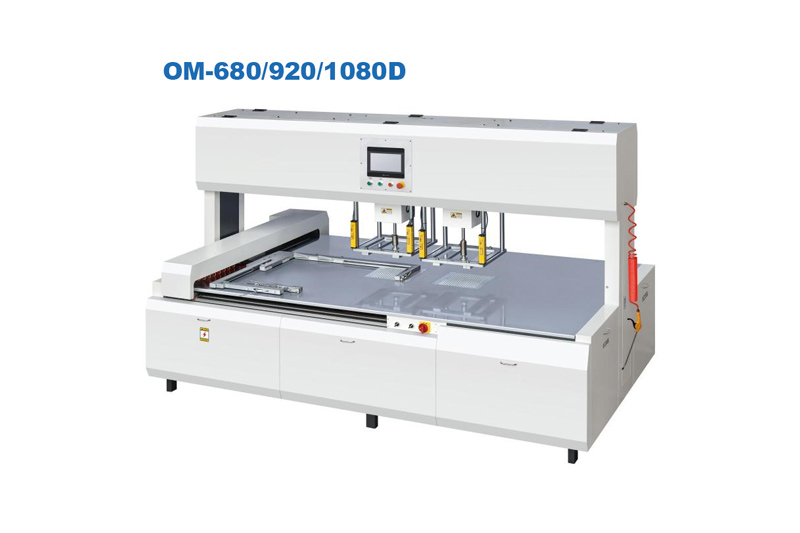
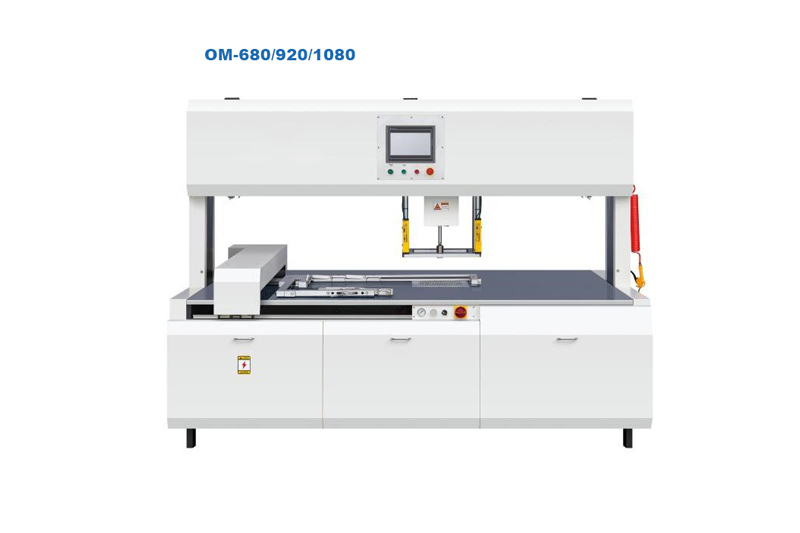
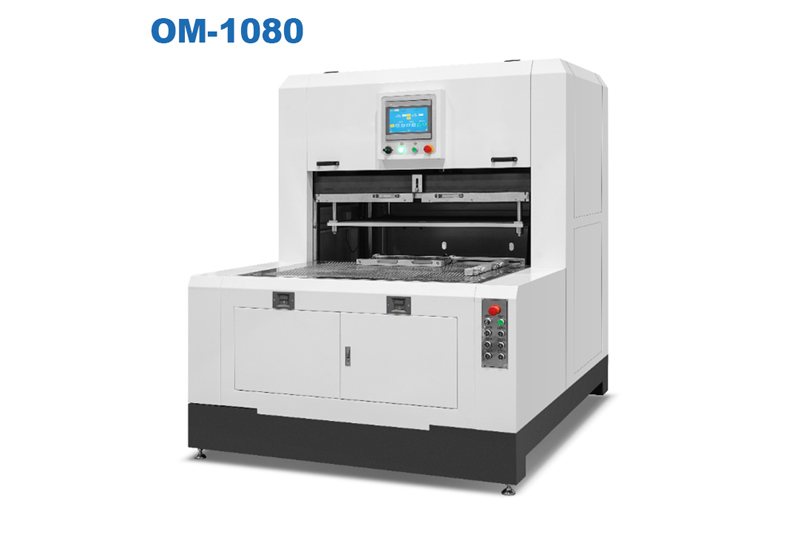
You have probably experienced this scenario: a rush order arrives at 9:00 AM, the design is simple, the material is already on the shelf, and your die cutter sits idle for the first 45 minutes of the job while your operator changes tools, adjusts pressure, runs test sheets, and fine-tunes registration. By the time the first good part comes off the press, the customer is already asking for an updated delivery time.
For shops where short runs and frequent job changes define daily operations, setup time is not a minor inconvenience—it is the single largest constraint on throughput. Quick-change die systems promise to address exactly this problem, but do they actually deliver the savings, and at what trade-off?
This article explains how quick-change systems work, analyzes the math behind setup time reduction, and helps you determine whether investing in this capability aligns with your production profile.
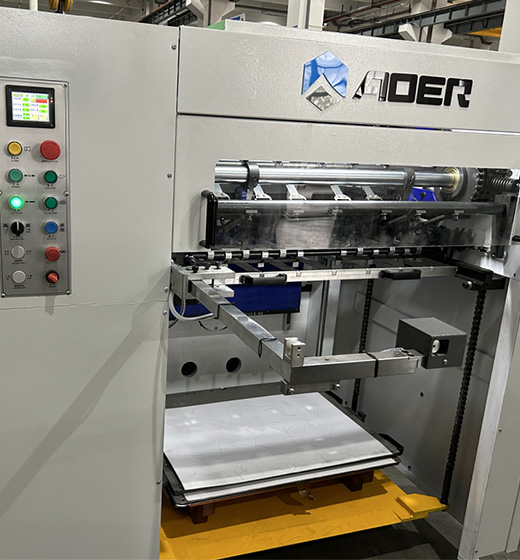
The term “quick-change die system” covers a range of engineering approaches, but the core idea is consistent: reduce the time the machine spends stopped between jobs by simplifying the mechanical steps required to remove one die and install the next.
In a conventional setup, the operator must stop the machine, remove the previous die (often requiring tools to unbolt or unclamp it), clean the chase or platen surface, position the new die, align it using registration marks or manual measurement, tighten clamps, run test sheets, measure results, adjust pressure or position, test again, and finally begin production. A typical manual press changeover takes 10–15 minutes; an automatic machine with feeder calibration can take 20–30 minutes or more. In a corrugated box plant, one documented case found average setup times of 55 minutes on a rotary die-cutter before improvement efforts.
Quick-change systems address several specific bottlenecks:
| Changeover Element | Traditional Method | Quick-Change Approach |
|---|---|---|
| Die mounting | Bolts, clamps requiring wrenches | Magnetic cylinders, quick-lock clamps, or slide-in cassettes |
| Positioning | Manual measurement, shimming, trial and error | Pre-calibrated stops, indexed mounting, alignment pins |
| Pressure setup | Run test sheets, measure, adjust, repeat | Pressure memory settings or automated calibration |
| Parallel activities | Most steps performed with machine stopped | External die preparation while machine still running |
Some quick-change systems for rotary applications allow the operator to prepare the next magnetic cylinder and flexible die while the press continues running, then complete the physical die swap in seconds. Flatbed systems may use cassette-style chase loading or quick-release clamping mechanisms that eliminate the need for tools during changeover.
For shops evaluating how traditional changeover times affect overall equipment effectiveness, understanding the baseline setup requirements across different machine types is essential. See how manual and automatic presses compare on setup time and job flexibility: examine baseline changeover requirements across different die cutting machine configurations.
What this means for your shop: A quick-change system does not make the cutting process faster. It makes the time between jobs shorter. For a shop running 8–10 job changes per day, reducing each changeover by 15 minutes adds 2–2.5 hours of productive cutting time daily. For a shop running two job changes daily, the gain is much smaller. The benefit scales directly with changeover frequency.
Before evaluating any quick-change system, the first question is not “how fast is the changeover?” but “how many changeovers do I run?” The return on investment changes dramatically depending on your answer.
Track your actual changeover times across a typical week. Be honest: include cleaning, test sheets, and adjustments, not just the time the operator spends physically swapping the die.
Example:
Average changeover time per job: 28 minutes (manual press)
Average number of changeovers per shift: 4
Shifts per day: 2
Days per week: 5
Weekly changeover time: 28 minutes × 4 changes × 2 shifts × 5 days = 1,120 minutes (18.7 hours) of non-cutting machine time per week.
Quick-change systems typically reduce setup time by 40–60% compared to traditional methods, depending on the specific technology and operator training. Some documented case studies show reductions from 55 minutes to 32 minutes (42% improvement) using SMED methodology. In other applications, dedicated quick-change hardware can cut changeover to under 10 minutes.
Example (continuing from above):
Starting changeover: 28 minutes
With quick-change: 12 minutes
Reduction per changeover: 16 minutes
New weekly changeover time: 12 minutes × 4 changes × 2 shifts × 5 days = 480 minutes (8 hours)
Weekly time saved: 1,120 − 480 = 640 minutes (10.7 hours)
Multiply recovered hours by your loaded shop rate (machine + operator + overhead). A typical finishing line might be valued at $150–$300 per hour, depending on equipment and market.
Example (conservative estimate):
Recovered time per week: 10.7 hours
Shop rate: $175/hour
Weekly recovered value: $1,872.50
Annual recovered value (50 weeks): $93,625
This simplified calculation does not include secondary benefits: reduced material waste from shorter test runs, improved on-time delivery performance, less operator fatigue from repetitive setup tasks, and the ability to accept shorter minimum order quantities profitably.
The counterpoint: If your shop runs one or two job changes daily, the math changes dramatically. Two changes per day at 28 minutes each totals 280 minutes (4.7 hours) of changeover time weekly. A reduction to 12 minutes per changeover saves 160 minutes (2.7 hours) weekly—still meaningful, but the annual recovered value would be roughly one-quarter of the high-changeover scenario.
Reducing changeover time is not only about productivity. There is a compelling operational safety dimension that is often overlooked in equipment comparisons.
Data from the U.S. Department of Labor’s Occupational Safety and Health Administration (OSHA) shows that mechanical power presses and die cutting equipment appear consistently in severe injury citations. In a 2023 enforcement case, an Ohio manufacturer was cited with $171,000 in proposed penalties after a worker suffered an amputation while operating a machine that lacked adequate safety protections. OSHA’s enforcement database lists multiple cases involving amputation injuries on power press equipment, reinforcing why proper machine guarding and lockout procedures—particularly during setup and changeover—are legally required and operationally essential.
What this means for your shop: Every minute an operator spends inside the machine during changeover is a minute of elevated risk. Quick-change systems that reduce hands-on time with the tooling—particularly those that allow external die preparation and fast, tool-free mounting—directly reduce cumulative operator exposure. This safety benefit does not appear on a cost-savings spreadsheet, but it is no less real.
A 2021 study applying DMAICT methodology to die changeover reduction found that converting internal setup activities (performed with machine stopped) to external activities (performed while machine is running) was a key lever for both time reduction and safety improvement. The same principle applies to quick-change hardware: systems that minimize the time the operator spends reaching into the cutting zone or handling heavy tooling deliver both efficiency and safety gains.
The Single-Minute Exchange of Dies (SMED) methodology, developed by Toyota and formalized by Japanese industrial engineer Shigeo Shingo, has been documented to achieve average changeover time reductions of 94 percent across multiple industries. While this figure comes from automotive stamping rather than packaging die cutting, the core principles—separating internal from external setup, converting internal steps to external where possible, and standardizing all remaining steps—apply directly to post-press finishing equipment.
For finishing departments that combine frequent job changes with high safety standards, integrating quick-change tooling with structured setup protocols can reduce both downtime and accident risk. See how workflow planning supports safer, faster job transitions: explore finishing workflow approaches for mixed-job production.
Not every quick-change system suits every application. The right choice depends on your dominant job types and changeover patterns.
Profile: 10+ job changes daily, batch sizes under 2,000 sheets, frequent die design changes
Priority: Minimize changeover time above all else
Technology match: Quick-change chases with pre-registered tooling, magnetic cylinders (rotary), or cassette-style flatbed tool loading
Trade-off: Higher upfront tooling cost per die; acceptable if changeover frequency is high enough
Profile: 3–5 job changes daily, repeat designs, longer runs (3,000–10,000 sheets)
Priority: Balance changeover speed with tooling cost
Technology match: SMED-optimized procedures plus modest hardware upgrades (quick clamps, pressure memory)
Trade-off: Not every die needs quick-change readiness; focus on your top 5–10 designs by frequency
Profile: Very high job variety, extremely short runs (under 500 sheets), designs rarely repeat
Priority: Eliminate die dependency entirely for small quantities
Technology match: Digital die cutting (laser or blade) may be more appropriate than physical quick-change dies
Trade-off: Digital solutions have different speeds and material limitations; not a direct replacement for production die cutting
In the packaging and printing industry, flatbed die-cutting machines are widely recognized as well-suited for shorter-run jobs with custom designs where precision is critical. The material flexibility and lower tooling costs inherent to flatbed technology make it a natural choice for shops whose production profile includes frequent design changes and batch sizes below the rotary economic threshold.
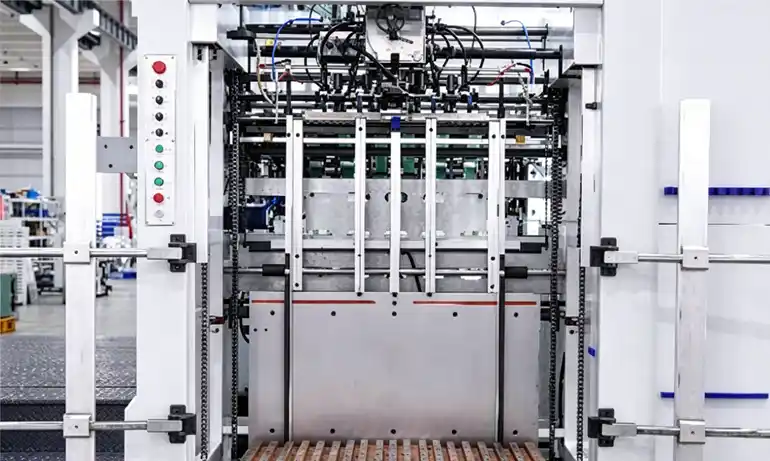
Even the most sophisticated quick-change system will underperform if the make-ready process around it is disorganized. Several supporting practices amplify the benefits of quick-change hardware.
Prepare the next die (including any necessary shims, matrix, or stripper components) before the current job finishes. This converts die preparation from an internal activity (machine stopped) to an external activity (machine running). In documented SMED implementations, this single change often accounts for 30–50% of total time reduction.
When all dies share consistent dimensions and mounting interfaces, changeover becomes predictable and repeatable. Die height variation—even small differences—requires time-consuming pressure adjustments on every job change. A case study on corrugated box die-cutting noted that altering die heights to a narrow window reduces the time needed to get the next die running.
Products such as the Marbach DZLplate—a protection plate with a printed height profile that takes over zone leveling for months after being inserted once—can help reduce knife make-ready time per job. The manufacturer reports that customers using the DZLplate experience a reduction of over 30% in their knife make-ready times per job, an optimization that directly improves productivity. Available in versions for both paperboard and large-format corrugated board machines, this type of passive, durable make-ready aid works alongside quick-change hardware to further compress the gap between jobs.
You now have a framework for evaluating quick-change die systems based on changeover frequency, tooling cost trade-offs, safety exposure, and supporting make-ready practices.
| If your shop primarily runs… | Priority focus for quick-change |
|---|---|
| High-mix, 8+ job changes daily, short runs | Hardware-based quick-change system + SMED process redesign |
| Moderate mix, 3–5 daily changes, repeat designs | Quick-change for your top repeat designs; standard changeover for others |
| Low mix, 1–2 daily changes, long runs | Likely not cost-justified; focus elsewhere |
| Very high mix, runs under 500 sheets, designs rarely repeat | Consider digital cutting alternatives for the shortest runs |
The most common mistake is assuming that quick-change technology alone solves the problem. Hardware accelerates changeover, but the biggest gains come from combining quick-change equipment with disciplined external setup practices, standardized tooling, and operator training in SMED principles. A quick-change chase on a machine where the operator still spends 10 minutes searching for tools and aligning dies by eye will not deliver the brochure’s promised time savings.
Once you have assessed your changeover frequency and tooling budget, comparing specific quick-change configurations becomes the logical next step. Different systems prioritize different trade-offs: magnetic cylinders offer extremely fast swaps but require higher die cost; mechanical quick-clamp systems are less expensive but slightly slower; cassette-style flatbed loading balances speed and cost for shops running large sheet sizes.
For production environments where reducing changeover time is a priority but high tooling costs are a concern, understanding how different die mounting systems affect both setup speed and operating cost helps inform the right balance. See how flatbed and automatic systems approach tooling changeover differently: review die mounting configurations across finishing equipment categories.
Automatic vs Manual Die Cutting for Book Covers
Flatbed or Rotary Die Cutting for Your Shop?
Five Hidden Costs of Cheap Die Cutting Machines
Understanding Die Make-Ready: From Test Sheets to Production Run
Short-Run Profitability: When Small Batches Make Sense
GET A QUOTE


 中文
中文 English
 Pусский
 Français
 Español