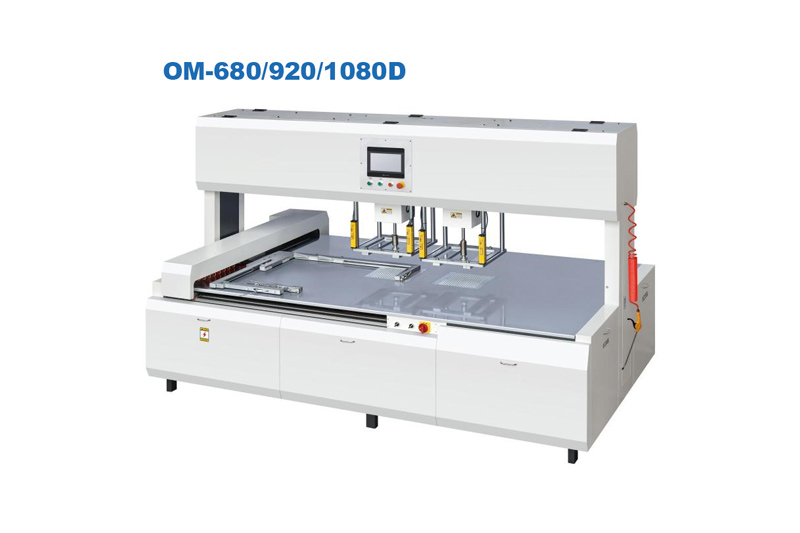
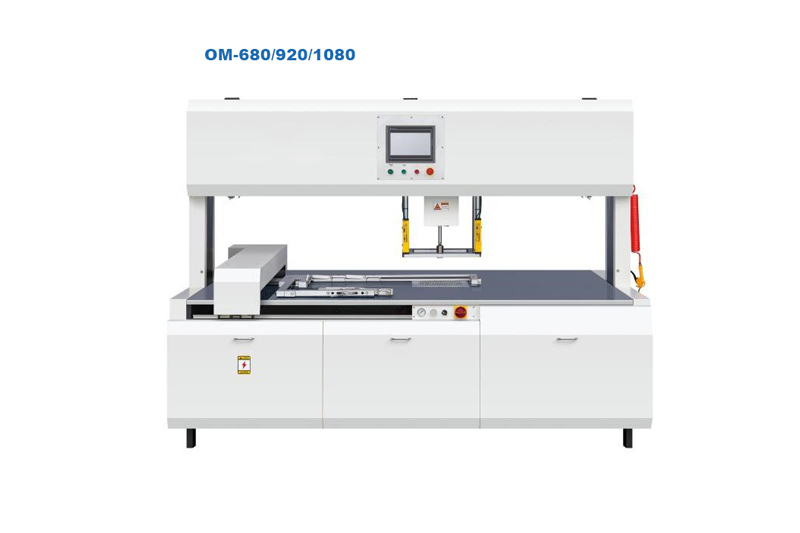
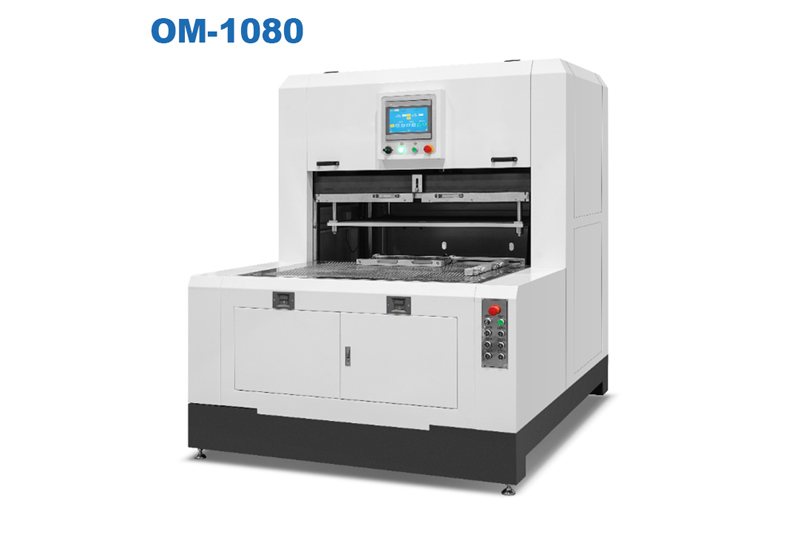
Every book cover needs a clean, precise crease or cut. But the machine that makes that happen can look very different depending on where you stand in your production journey. A small bindery running 500 covers a week faces a completely different equipment reality than a packaging plant processing 50,000 sheets daily.
The automatic vs. manual die cutting decision is rarely about which technology is “better.” It is about which one aligns with your batch sizes, material range, operator skill level, and acceptable cost per sheet. This article strips away the marketing claims and presents a volume-based framework for making the right choice for your book cover finishing line.
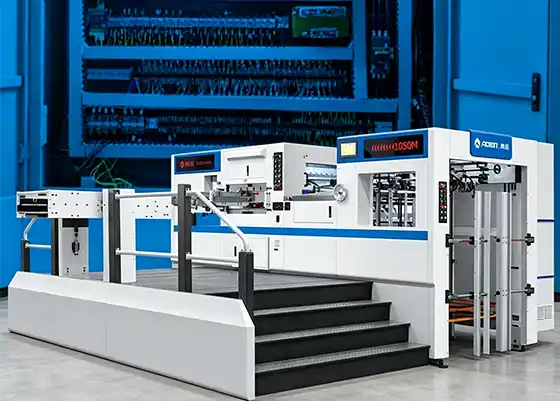
Before comparing outcomes, it helps to understand what these terms describe in real operating terms—not just brochure language.
| Feature | Manual Die Cutting | Automatic Die Cutting |
| Feeding method | Hand-fed, sheet by sheet | Automatic suction or lead-edge feeder |
| Typical speed range | 500–1,800 sheets per hour | 3,000–8,000 sheets per hour |
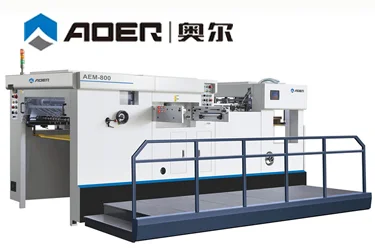
| Typical sheet size range | 750×520 mm to 1,300×920 mm (ML/TYM series) | 800×620 mm to 1,670×1,210 mm (AEM/AEMG series) |
| Operator attention required | Continuous (every sheet handled) | Intermittent (monitoring, replenishing pile) |
| Setup time for new job | 15–30 minutes | 30–60 minutes (more adjustments) |
| Best-fit batch size | Under 2,000 sheets | Over 3,000 sheets |
| Material thickness range | Very wide (thin paper to 3mm+ board) | Wide, but very thick board may require special feeders |
What this means for your floor: A manual machine keeps an operator busy but pays off quickly for short runs. An automatic machine requires higher investment and more setup discipline but delivers dramatically lower per-sheet labor costs once running.
Instead of starting with machine specifications, start with your actual production patterns. Answer these five questions honestly, and the automatic vs. manual decision usually becomes clear.
This is the single most important variable.
| Average Batch Size (sheets) | Recommended Approach | Why |
| Under 1,000 | Manual strongly preferred | Setup time on automatic eats into any speed advantage |
| 1,000–3,000 | Either can work; depends on frequency | Manual is simpler; automatic needs disciplined batch accumulation |
| 3,000–8,000 | Automatic preferred | Labor savings outweigh longer setup |
| Over 8,000 | Automatic strongly preferred | Manual becomes physically unsustainable |
According to a 2023 operational benchmark study published in the Journal of Print and Media Technology, “finishing operations with average batch sizes below 2,000 sheets achieve lower total cost per job on manual flatbed equipment, while operations above 5,000 sheets show automatic equipment delivering 40–60% lower labor cost per 1,000 sheets.”
Each size change often requires different chase sizes, pressure adjustments, and feeder settings.
3 or fewer sizes weekly → Automatic becomes easier to justify because you can amortize setup across longer runs of each size.
5+ sizes weekly → Manual may be more practical, especially if sizes vary significantly. The setup simplicity of manual machines becomes a real advantage.
A finding from Printing Industries of America’s 2022 workforce survey: “Shops with operator turnover above 30% annually report significantly higher spoilage rates on automatic die cutting equipment compared to manual machines, due to the steeper learning curve for feeder calibration and registration systems.”
Experienced, stable team → Automatic’s complexity is manageable; the learning curve pays off.
High turnover or mixed skill levels → Manual machines are more forgiving and easier to train on.
Manual machines generally handle a wider range of thicknesses without adjustment because the operator visually checks each sheet. Automatic feeders work best within a narrower thickness window.
Wide variation (0.5mm to 3mm+ in same shift) → Manual often more reliable.
Consistent thickness range (e.g., 1–2mm book board) → Automatic performs well.
Automatic machines, once dialed in, typically produce lower spoilage over long runs—often below 1% for well-maintained equipment. However, spoilage during automatic setup can be higher than manual because adjusting feeder timing and sheet separation takes skill.
A 2021 analysis by Idealliance found that “job changeover on automatic flatbed die cutters generates 3–5 times more setup waste than manual equivalents, but steady-state running waste is 60–70% lower.” The implication: automatic excels at long runs; manual excels at protecting expensive material during short-run setups.
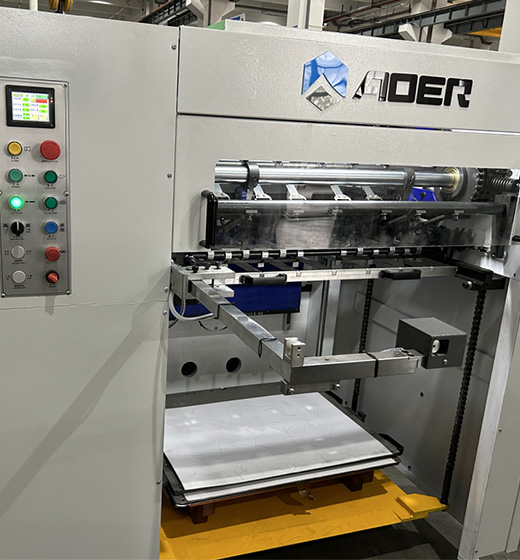
Let these three typical production profiles guide your thinking.
Volume: 300–800 hardcover book covers per week
Materials: 2–3.5mm greyboard, often irregular sizes
Typical batch: 50–200 sheets
Operator team: 2 people, cross-trained on multiple tasks
Recommendation: Manual die cutting. An automatic machine would spend more time in setup and feeder adjustment than actually running. The manual operator’s ability to visually check each sheet catches problems immediately.
Real-world example: A custom journal maker using ML-930 manual machines produces 150 different cover designs monthly. Switching to automatic would require accumulating batches by size—impractical given the variety. Manual remains the correct choice.
Volume: 8,000–12,000 softcover book covers per week
Materials: 800–1,200 gsm paperboard, consistent sizes
Typical batch: 2,000–4,000 sheets
Operator team: 4–6 people, dedicated finishing department
Recommendation: Automatic die cutting. With consistent sizes and batches above 2,000 sheets, the labor savings per 1,000 sheets (typically 60–70% lower than manual) justifies the higher equipment investment and longer setup time.
Volume: 20,000 sheets total weekly, but spread across 15–20 different book cover sizes and materials
Typical batch: 500–2,000 sheets per size
Situation: Some sizes run weekly; some run monthly
Recommendation: Both. Many mid-sized shops operate one automatic machine for their top five sizes (running batches accumulated over 1–2 weeks) and one manual machine for everything else—short runs, odd sizes, samples, and rush jobs. The manual machine acts as a flexible overflow valve.
For shops considering a mixed approach, understanding how manual machines handle variable thicknesses helps define which jobs stay on manual and which migrate to automatic. See manual machine capabilities for thick book board: explore the Manual Die Cutting Machine for mixed thicknesses.
Choosing incorrectly creates costs that never appear on an invoice but show up in daily frustration.
If You Choose Automatic But Should Have Chosen Manual
Excessive setup waste – 30–60 minutes of spoiled sheets every time you run a sub-1,000 sheet batch
Operator frustration – Adjusting feeders for constantly changing sheet sizes becomes exhausting
Machine underutilization – An expensive asset sitting idle while operators wait to accumulate batch quantities
If You Choose Manual But Should Have Chosen Automatic
Labor cost creep – Hand-feeding 8,000 sheets weekly consumes operator hours that could be allocated elsewhere
Physical fatigue – Manual feeding at scale leads to repetitive strain and higher absenteeism
Capacity ceiling – You simply cannot grow beyond a certain volume without adding shifts or multiple manual machines
The breakeven insight: According to equipment lifecycle data reported in World Packaging (2023), “the total cost of ownership crossover between manual and automatic flatbed die cutters typically occurs between 2,000 and 3,500 sheets per average batch, varying primarily with local labor rates and material costs.” Below this range, manual wins on total cost. Above it, automatic pulls ahead.
The U.S. Bureau of Labor Statistics (Occupational Employment and Wage Statistics) publishes detailed data on finishing machine operator wages. When calculating your manual vs. automatic payback, use actual local wage data rather than generic estimates. A difference of $5 per hour in loaded labor cost shifts the breakeven batch size by several hundred sheets.
ISO 12636 (Graphic technology – Blanket for offset printing) and related finishing standards provide indirect guidance on acceptable register variation. For book covers, a practical benchmark from the Binding Industries Association suggests: “Register variation exceeding 0.3mm on spine crease placement produces visually noticeable misalignment on covers with foil or embossing.” Manual machines, when properly set, typically hold ±0.2mm. Automatic machines with servo feeders maintain ±0.1mm over long runs—better precision, but only after correct setup.
Data from the Occupational Safety and Health Administration (OSHA) indicates that automatic machines with light curtains and two-hand controls have statistically lower injury rates per operating hour than manual machines, primarily because operators are not reaching into the cutting zone for every cycle. However, automatic machines introduce entanglement risks during feeder cleaning—a different hazard profile requiring different training.
For shops growing beyond manual capacity, understanding how to phase in automation without disrupting existing workflows is critical: review finishing the automatic die cutting machine.
You now have a volume-based framework for choosing between manual and automatic die cutting for book covers. The decision rests on three primary factors: average batch size, size variety, and labor cost.
| Your Primary Profile | Recommended Direction |
| Average batch < 1,000 sheets, high variety | Manual |
| Average batch 1,000–3,000 sheets, mixed variety | Either—test your actual batch size distribution |
| Average batch > 3,000 sheets, low variety | Automatic |
| Growing beyond capacity but not ready for full automation | Both—one automatic for top sizes, one manual for the rest |
The most common mistake is assuming that “automatic” is always an upgrade. It is not—it is a different operating model that works best when batch sizes, material consistency, and operator skill align. When they do not align, a well-chosen manual machine is not a compromise; it is the correct engineering solution for that specific production environment.
Five Signs Your Finishing Line Has Outgrown Manual Feeding
Short-Run Die Cutting: Setup Time Reduction Techniques
Understanding Die Cutting Pressure: Why 3000kN Matters for Thick Board
Mixed Approach Finishing: Operating One Automatic and One Manual Machine
GET A QUOTE


 中文
中文 English
 Pусский
 Français
 Español