When a finishing department plans capacity expansion, one of the earliest technical questions is not about brand or price—it is about the fundamental cutting technology. Flatbed and rotary die cutting produce similar-looking results but operate on completely different principles, with different cost structures, setup disciplines, and volume sweet spots.
Choosing between them is not about which technology is “more advanced.” Rotary is not simply an upgrade to flatbed; each dominates a different range of production realities.
This article explains how the two technologies actually work on a shop floor, compares their trade-offs in plain language, and provides a decision framework based on your typical batch sizes, material types, and die usage patterns.
Understanding the mechanical difference is essential because it directly drives every operational trade-off that follows.
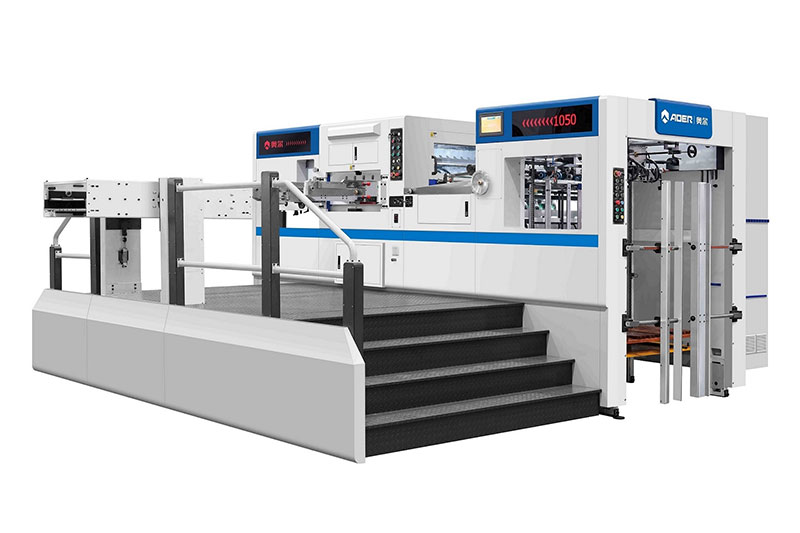
A flatbed die cutter holds a flat cutting die on a stationary lower platen (or an upper chase). A second flat surface—the platen—presses down onto the die with each cycle. The material moves into position, stops, the press closes, cuts or creases, opens, and the sheet moves out. Then the next sheet enters.
The key operational characteristic: stop-and-start motion. Each sheet is processed in discrete cycles.
A rotary die cutter uses a cylindrical cutting die mounted on a rotating cylinder. A mating anvil cylinder (hard or soft surface) runs parallel. Material feeds continuously between the rotating cylinders. The die’s cutting rules contact the material in a rolling, linear fashion as both cylinders turn.
The key operational characteristic: continuous motion. Material moves at constant speed; cutting happens progressively across the web or sheet.
| Feature | Flatbed Die Cutting | Rotary Die Cutting |
| Cutting action | Reciprocating (press close → cut → open) | Rotating (continuous rolling contact) |
| Typical speed range | 3,000–8,000 sheets/hour (flat sheet) | 30–150 meters/minute (web) or 10,000+ sheets/hour |
| Die type | Flat steel rule die, typically 18–40mm thick | Rotary die (solid engraved or flexible magnetic wrap) |
| Die cost per part | Low to moderate (tooling cost) | High for solid rotary; moderate for flexible |
| Setup/changeover time | 15–45 minutes | 10–30 minutes (flexible); longer for solid |
| Material thickness range | Very wide (paper to 7mm+ board) | Narrower (best for films, paper, thin board <1.5mm) |
| Typical sheet/web format | Cut sheet (individual pieces) | Roll-to-roll web or cut sheet with feeder |
| Precision consistency | Very good (±0.1–0.2mm) | Excellent (±0.05–0.1mm) for long runs |
What this means for your production: Flatbed handles thick board and short runs economically because dies are inexpensive. Rotary delivers much higher throughput and better per-part consistency but requires higher die investment and works best with thinner materials.
Die cutting technology selection ultimately rests on how these trade-offs interact with your actual production profile. Explore our full lineup of flatbed die cutting machines.
This is often the deciding factor for shops that run many different designs.
Flatbed steel rule dies: Typically $200–$800 depending on complexity. They are fabricated by bending steel rule into a plywood or resin base. For a shop running 50 different book cover designs per year, flatbed tooling costs remain manageable.
Rotary dies: Solid engraved rotary dies can cost $3,000–$15,000 or more. Flexible magnetic wrap dies (steel rule mounted on a magnetic cylinder) range from $800–$2,500. Rotary tooling requires specialized manufacturing.
Data from the International Association of Diecutting and Diemaking (IADD) indicates that “flatbed tooling reaches cost parity with rotary at approximately 5,000–8,000 linear meters of cutting per design, depending on material abrasiveness.” Below that volume, flatbed has lower total tooling cost.
Practical implication: If your average die design runs less than 50,000 sheets per year, flatbed almost certainly wins on tooling economics.
Rotary die cutting relies on the interaction between the rotating die cylinder and an anvil. As material thickness increases, the mechanical demands on the rotary system grow non-linearly.
Rotary sweet spot: Films, paper, light paperboard (<500 gsm or ~0.6mm), pressure-sensitive materials.
Rotary gray area: Standard book cover board (600–1,200 gsm, roughly 0.8–1.5mm). Possible with heavy-duty rotary systems but with reduced die life.
Rotary difficult or impossible: Thick greyboard (>2mm), corrugated board (unless specifically designed for it), plastic sheets >1.5mm.
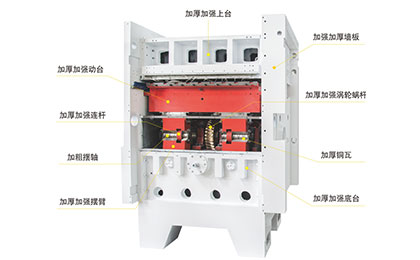
Flatbed handles all of these routinely. A well-constructed flatbed press with H250 cast frame and 3000kN+ pressure can cleanly cut 3–4mm board, crease 7mm thick paper stacks, and handle materials that would destroy rotary dies quickly.
Rotary’s advantage grows with total running hours per die design.
| Annual Runtime per Design (hours) | Technology Recommendation |
| Under 50 hours | Flatbed – rotary die investment cannot be recovered |
| 50–200 hours | Either – depends on material and precision needs |
| Over 200 hours | Rotary – long-run efficiency outweighs tooling cost |
A technical paper from the Flexographic Technical Association (FTA) notes that “rotary die cutting achieves 85–95% uptime in dedicated long-run configurations, while flatbed presses typically operate at 65–80% utilization when changeovers are included.” For a shop running the same book cover trim size for 300 hours annually, rotary’s higher running speed and lower operator attention per sheet create meaningful labor savings.
Rotary die cutting delivers inherently better registration consistency over long runs because the material path is fixed and the die-to-anvil gap is mechanically controlled. Once set, a rotary system maintains ±0.05–0.1mm without drift.
Flatbed systems, particularly older or lower-precision models, can show slight register variation (typically ±0.1–0.2mm) due to sheet stop accuracy and platen parallelism. Modern flatbed presses with servo feeders and precision guides approach rotary-level consistency but rarely match it over runs exceeding 100,000 sheets.
Practical threshold: For pharmaceutical folding cartons or high-end cosmetic boxes requiring ±0.1mm cut-to-print registration, rotary is often specified. For book covers where ±0.3mm is acceptable, flatbed works perfectly.
Flatbed presses handle size changes by changing the chase and adjusting side guides—a 15–30 minute process. The same flatbed that cuts 750×520 mm sheets can also cut 1670×1210 mm sheets.
Rotary systems are more size-constrained. The die cylinder circumference determines maximum cutting length. Changing size often requires different cylinders or a different machine. Width changes are possible, but with limits.
Implication: Shops with highly variable sheet sizes typically prefer flatbed. Shops with one or two standard formats (e.g., a single book trim size) can optimize for rotary.
Let these common production profiles guide your thinking.
Recommendation: Flatbed
Why: Thick board exceeds rotary’s reliable range. Rotary dies would wear rapidly, and material feed becomes problematic. Flatbed handles this with standard steel rule dies and robust construction.
Real-world reference: Most hardcover book binderies worldwide use flatbed die cutting exclusively for covers, reserving rotary for endleaf trimming or other thin materials.
Recommendation: Either, depending on volume
Below 200,000 covers annually → Flatbed is economically sound.
Above 500,000 covers annually → Rotary’s speed and automation become compelling.
Decision point: Map your annual volume per cover size. If you have one or two cover designs running year-round, rotary tooling amortizes. If you run 50 designs in small batches, stick with flatbed.
Recommendation: Rotary
Why: These materials are rotary’s natural domain. High-speed web-fed rotary lines running at 100+ meters/minute produce labels or flexible packaging at costs flatbed cannot approach.
Recommendation: Flatbed, possibly with a rotary for specific thin-material sub-lines
Why: Flatbed’s material flexibility matches mixed production. Adding a dedicated rotary line only makes sense if you have enough thin-material volume to justify separate equipment.
Consider a mid-size book manufacturer producing 1.5 million softcover books annually across 80 different cover designs. They have always used flatbed die cutting. A new long-term contract adds one cover design running 400,000 units per year—a single size, single design.
Flatbed scenario: Running 400,000 sheets annually on flatbed at 5,000 sheets/hour requires 80 operating hours per year for that design alone. Die cost remains low. Acceptable.
Rotary scenario: Investing in a rotary system for just this one design would require $8,000–$12,000 in tooling plus machine investment. Payback comes from labor reduction (one operator instead of two for that line) and higher running speed (perhaps 10,000+ sheets/hour equivalent).
The actual solution this shop chose: Keep the flatbed line for all 80 designs. Add a dedicated narrow-web rotary finishing line only for the high-volume design, running alongside the flatbed operation. Both technologies coexist, each serving its volume and material sweet spot.
You now have a decision framework based on material thickness, volume per design, die tooling budget, and size flexibility needs. The choice between flatbed and rotary is fundamentally about matching technology characteristics to your actual production profile, not about which technology is “newer.”
| If your shop primarily runs... | Start with... |
| Thick book board (>1.5mm), corrugated, mixed sizes, many die designs | Flatbed |
| Thin paper, labels, flexible packaging, one or two standard widths, very high volume | Rotary |
| Both thick and thin materials, moderate volume | Flatbed as primary; consider rotary for dedicated high-volume thin applications |
The most common mistake is assuming rotary is universally “better” because it is faster. For many book cover and packaging shops, flatbed remains the correct core technology because it handles the material range and design variety that actually appears on the floor. Rotary shines in its domain—but that domain is narrower than marketing materials often suggest.
Once you have clarified your typical material thickness range, annual volume per design, and tooling budget, comparing specific equipment configurations becomes the logical next step. Flatbed systems range from manual-feed models optimized for short-run variety to fully automatic lines for consistent high-volume work within the same technology family. You can compare Stripping Machine across different format sizes to see which matches your material types and volume requirements.
Flatbed Die Cutting Pressure: Why 3000kN Matters for Thick Board
Rotary Die Tooling Economics: When High Die Cost Makes Sense
Material Thickness Limits in Die Cutting: A Shop Reference
GET A QUOTE


 中文
中文 English
 Pусский
 Français
 Español