You have probably experienced this frustration: the same foil, the same machine, the same temperature setting—but on one book cover the foil transfers like a dream, and on the next it either refuses to stick or flakes off within days. The only variable that changed was the stock itself.
This is not random. Coated and uncoated book stocks interact with heat, pressure, and foil adhesive in fundamentally different ways. Understanding why these differences exist is the first step toward achieving consistent hot foiling results across both material types. This article explains the science behind the surface, provides practical adjustment guidelines for each stock category, and helps you diagnose the most common failure modes before they ruin a batch.
The difference starts with porosity—how easily liquids, gases, or in this case, molten adhesive, can penetrate the paper surface.
| Property | Uncoated Book Stock | Coated Book Stock |
| Surface porosity | High–fiber remains exposed | Low – clay or polymer coating seals fibers |
| Adhesive absorption | Rapid – foil adhesive soaks into the sheet | Slow – adhesive sits on top of coating |
| Heat conductivity | Moderate – heat disperses into fibers | Higher – coating reflects or conducts heat differently |
| Typical applications | Novels, notebooks, matte-finish covers | Magazines, art books, premium catalogs, photo books |
| Foil adhesion challenge | Foil disappears or becomes dull | Foil fails to stick or chips off |
According to a technical bulletin from the Technical Association of the Pulp and Paper Industry (TAPPI) , “uncoated papers exhibit surface roughness values (PPS) 3–5 times higher than coated papers of equivalent basis weight, directly affecting the contact area available for thermal transfer processes.” In plain language: uncoated stock gives foil adhesive more places to “grab,” but also more places to drain away.
What this means for your foiling results: On uncoated stock, the challenge is usually adhesive starvation—the paper drinks the adhesive before it can bond properly. On coated stock, the challenge is usually poor mechanical anchoring—the adhesive has nothing to grip because the coating layer sits between the foil and the paper fibers.
Because heat behavior differs, your machine settings cannot stay the same when switching between coated and uncoated stocks. The table below offers starting points based on industry practice and findings reported in Flexo & Gravure Global (2023), which noted that “optimal transfer temperature varies by as much as 30°C between highly absorbent uncoated board and low-absorption coated art paper.”
| Parameter | Uncoated Stock (e.g., kraft, offset, uncoated board) | Coated Stock (e.g., gloss art paper, matte coated, cast-coated) |
| Platen temperature | 110–130°C (lower end of typical range) | 130–160°C (higher end, up to 180°C for stubborn coatings) |
| Dwell time | 0.6–1.0 seconds | 0.8–1.4 seconds |
| Pressure | Moderate to firm | Lighter, more uniform |
| Foil type recommendation | Pigment foil or adhesive-rich foil | Standard metallic foil or specialty coating-compatible foil |
Uncoated stock requires less heat because excessive heat drives adhesive deeper into the fiber matrix, leaving less on the surface. Lower temperatures keep the adhesive more viscous and closer to the paper surface. A shorter dwell time achieves the same effect: the bond forms before the adhesive can migrate into the sheet.
Research published in the Journal of Printing Science and Technology (2022) measured adhesive penetration depth under controlled conditions: “On uncoated woodfree paper, increasing dwell time from 0.5 to 1.2 seconds doubled adhesive penetration depth but only improved peel resistance by 12%, indicating diminishing returns beyond 0.8 seconds.” In practical terms, holding the foil against uncoated stock longer actually wastes adhesive without strengthening the bond.
Coated stock needs higher heat to soften the coating layer itself. Many coatings (clay, calcium carbonate, or acrylic-based) act as thermal insulators. The foil must generate enough heat to penetrate this insulating layer and activate the adhesive at the coating-paper interface. However, excessive pressure on coated stock can crush the coating, creating a visibly flattened, dull spot around the foiled area.
Real-world implication: If your shop switches frequently between coated and uncoated book stocks, a machine with programmable temperature presets saves significant setup time. Relying on memory or handwritten logs inevitably leads to mismatched settings and wasted sheets.
Understanding failure patterns turns random frustration into systematic troubleshooting. Use this step-by-step diagnostic approach when foiling results disappoint.
| Symptom | Most Likely Cause | Stock Most Affected |
| Foil missing in small, random spots | Surface contamination or uneven coating | Coated stock |
| Foil appears dull or grayish | Adhesive absorbed too deeply | Uncoated stock |
| Foil flakes off when rubbed | Inadequate temperature or pressure | Coated stock (lack of anchoring) |
| Foil leaves a “halo” of residue around edges | Temperature too high, adhesive bleeding | Uncoated stock |
Apply standard cellophane tape firmly over the foiled area, then pull it off at a 90-degree angle. If significant foil transfers to the tape, your bond is inadequate. For coated stock, increase temperature in 5°C increments. For uncoated stock, reduce temperature or shorten dwell time.
Not all coatings behave identically. According to data from Idealliance (formerly the International Digital Enterprise Alliance), cast-coated papers (high-gloss, mirror-like surface) require the highest temperature settings, often 20–30°C above standard coated stock. Matte-coated papers, by contrast, behave more like a hybrid—lower porosity than uncoated but more absorbent than gloss-coated.
Ask your paper supplier for the coating type and any known foiling compatibility notes. Some coating formulations contain waxes or slip agents specifically designed to prevent sticking—these actively resist hot foil transfer.
Before committing an entire batch, run five test sheets at different temperatures:
| Test # | Temperature (relative to baseline) | Observe |
| 1 | Baseline – 10°C | Foil transfer? Any adhesion? |
| 2 | Baseline – 5°C | Compare to baseline |
| 3 | Baseline (manufacturer recommended) | Reference result |
| 4 | Baseline + 5°C | Check for bleeding or dulling |
| 5 | Baseline + 10°C | Upper limit—risk of scorching |
Document results for each stock type. Over time, you will develop a custom temperature library that outperforms generic recommendations.
For operations that run both coated and uncoated stocks daily, machine features like eight-zone independent temperature control allow different temperature profiles across the platen. See how zone control is implemented on integrated finishing systems: explore temperature control configurations for mixed stocks.
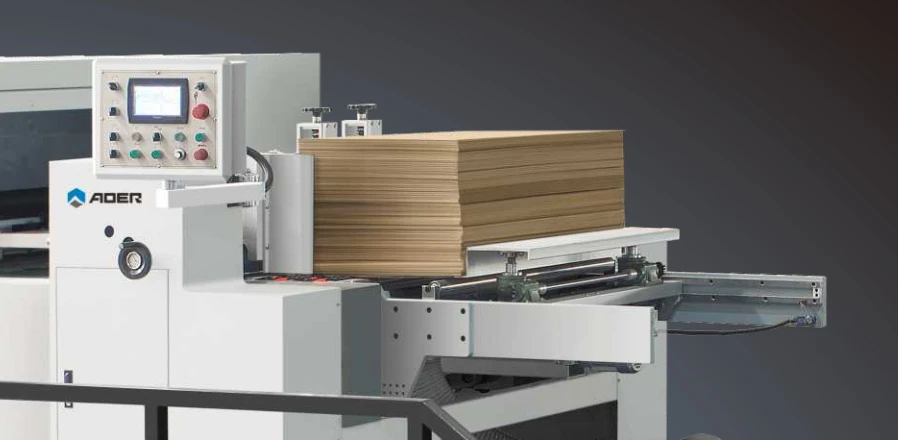
A commercial printer producing 50,000 softcover books monthly switched from a single uncoated stock to a mix that included 40% coated art paper covers. Initial hot foiling on the coated stock showed 12–15% rejection, primarily from foil failing to adhere along the edges of solid areas.
Tape test revealed complete foil removal on coated samples → inadequate adhesion.
Temperature ladder showed improvement starting at baseline +12°C.
Pressure test found that the same pressure used for uncoated stock was crushing the coating on gloss art paper.
Dwell time adjustment from 0.7 to 1.1 seconds completed the solution.
Uncoated stock (for the remaining 60% of jobs): 120°C, 0.7 seconds, standard pressure
Coated art paper (40% of jobs): 148°C, 1.1 seconds, reduced pressure by 18%
Rejection rate on coated stock dropped from 12–15% to under 3%, and the shop saved an estimated 40 sheets per setup (approximately 800 sheets monthly) by eliminating trial-and-error runs.
The key learning: separate settings for separate stocks are non-negotiable. The machine itself did not change; the operating discipline did.
Two external references help establish measurable foil adhesion criteria for both stock types.
ASTM D3359 (Standard Test Methods for Rating Adhesion by Tape Test) provides a formal classification from 0B (complete failure) to 5B (no removal). Implementing this simple test creates objective, comparable results across different stocks and operators, removing subjectivity from quality decisions.
A 2021 technical paper from the Flexographic Technical Association (FTA) examined foil transfer on coated substrates and concluded: “Surface energy below 38 dynes/cm correlates strongly with poor foil adhesion on coated stocks, regardless of temperature adjustments.” For problem-coated stocks, measuring surface energy with simple dyne test pens (available from industrial suppliers) identifies whether the issue is coating-related or process-related.
Research cited in the Journal of Graphic Engineering and Design (2023) adds that “coated stocks with surface energy below 35 dynes/cm require corona treatment or a specialized adhesion-promoting primer before reliable hot foiling.” This external finding explains why some premium coated book stocks seem impossible to foil—they may require pre-treatment regardless of machine settings.
Once you have optimized settings for your stock mix, the next efficiency gain often comes from reducing warm-up and changeover time. For strategies on minimizing downtime between runs of different materials, read: Changeover Reduction Techniques for Mixed Stock Finishing (suggested future guide—can be added when published).
You now understand why coated and uncoated book stocks demand different temperature, pressure, and dwell time settings. The diagnostic framework and tape test provide immediate, actionable quality control tools you can implement tomorrow.
The logical next step depends on your production reality:
If you run one stock type 90% of the time → dial in the perfect settings for that stock and document them thoroughly. Treat the other stock as an exception requiring full revalidation.
If you regularly switch between both types → look for equipment features that support variable settings: programmable presets, zoned temperature control, and quick-change foil loading.
If you struggle with a specific coated stock → test its surface energy before assuming your process is wrong. The issue may lie in the paper itself.
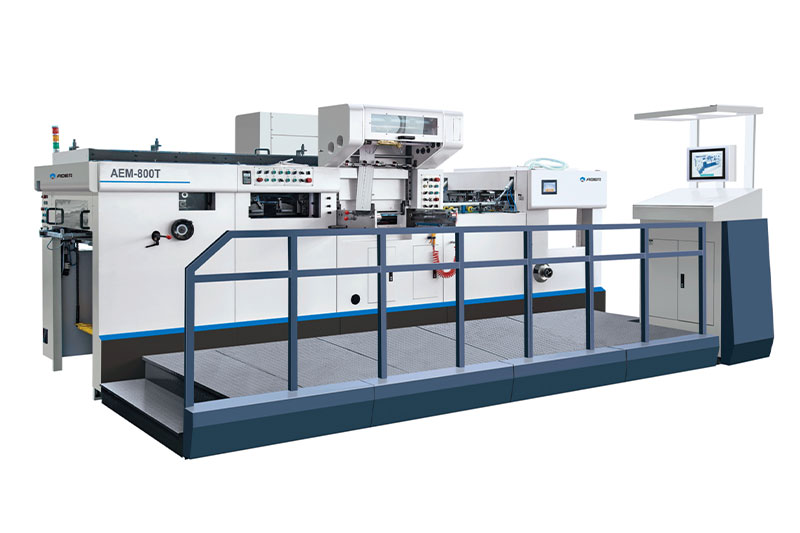
For production environments handling complex stock mixes with varying foil requirements, see how finishing workflows are designed to maintain consistency across material changes: view output samples and select the right match from an automatic hot stamping machine series.
Understanding Foil Adhesion: Temperature, Pressure, and Dwell Time
Surface Energy Testing for Problem Substrates
Five Signs Your Hot Foil Temperature Control Needs an Upgrade
Short-Run vs Long-Run Foiling: Parameter Differences
GET A QUOTE


 中文
中文 English
 Pусский
 Français
 Español