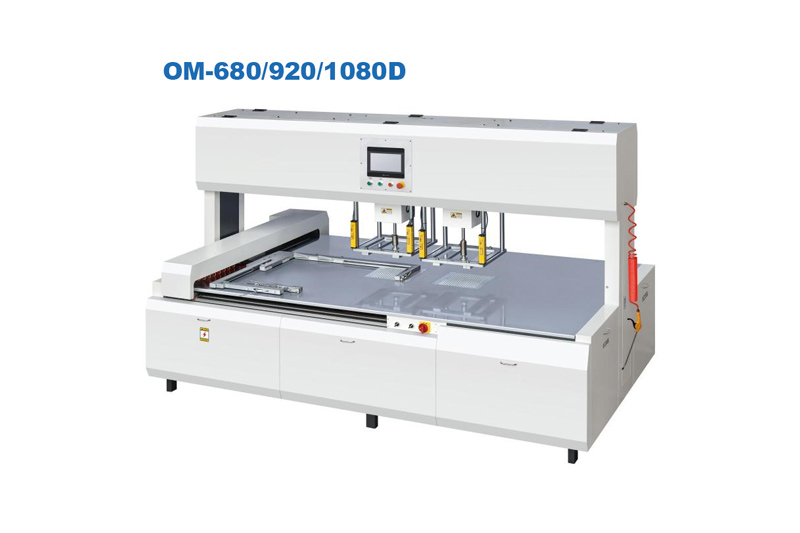
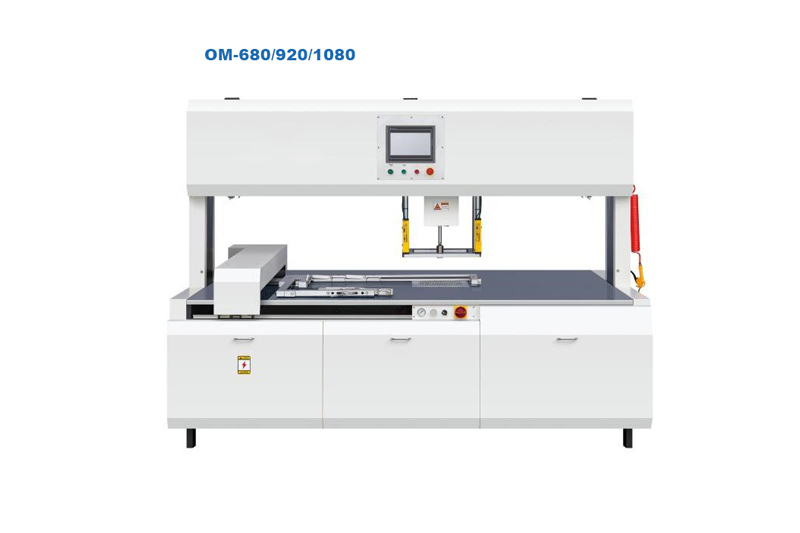
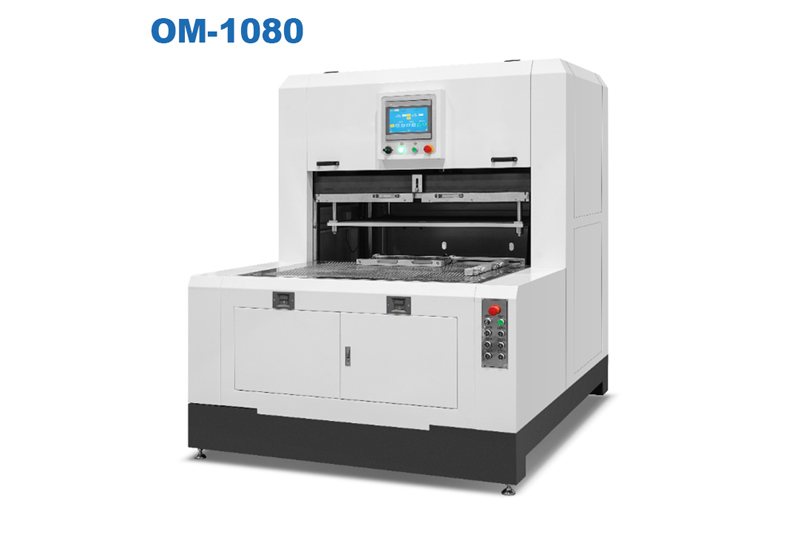
A packaging business owner called me last month. He had just spent $45,000 on an automatic die cutter—and he was worried he'd made a mistake. "Everyone said manual was dead," he explained. "But half my jobs are under 1,000 pieces. The automatic spends more time setting up than cutting."
Across town, another owner runs three manual presses from the 1990s. He's happy. His average batch is 500 custom folding cartons for local bakeries. But he admits: "I turn down anything over 5,000 pieces. I just can't compete on those."
Neither owner is wrong. They just have different work.
The real question isn't "which is better?" It's "which fits your actual production profile?" Let me walk you through an honest comparison—no cheerleading for either side.
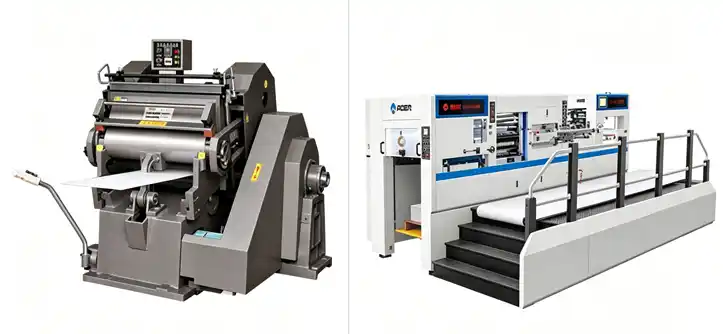
Manual flatbed die cutters have been around for decades. There's a reason they haven't disappeared.
Where manual excels
Batch sizes under 2,000 sheets. Setup on a manual press takes 10-15 minutes. On an automatic, even with quick-change tooling, you're looking at 20-30 minutes including feeder calibration. For a 500-piece run, that extra 15 minutes of setup eats up any speed advantage the automatic might offer during the run.
Frequent job changes. If you run 15 different carton sizes in a single shift, a manual press lets you swap dies quickly without reprogramming feeders, adjusting suction timing, or recalibrating registration cameras. You put the die in. You pull the lever. You're done.
Tricky materials. Warped board, super-thin paper, or materials with unpredictable feeding behavior—manual feed gives you complete control. You can see and feel each sheet as it enters. No misfeeds, no double-sheets jamming the machine.
Prototyping and sampling. When the customer wants to see 20 samples before approving the full run, manual is perfect. You're not spending 30 minutes setting up an automatic for twenty sheets.
Budget-conscious startups. A used manual press in good condition can be found for 5,000−5,000−12,000. An entry-level automatic starts around 35,000−35,000−50,000. If cash flow is tight, manual gets you cutting boxes this month instead of next year.
The manual trade-offs
The downsides are real but not fatal for the right shop. Throughput tops out around 300-500 sheets per hour sustained. Operator fatigue is a factor on long shifts. And you'll need a separate stripping station—add another 10-20 seconds per sheet for manual waste removal.
But here's the key: those trade-offs only matter if you're running batches large enough to make them visible. At 500 sheets per run, the difference between 300 sheets/hour and 5,000 sheets/hour is irrelevant—you're done in two hours either way.
Now let's look at the other side fairly.
Where automatic excels
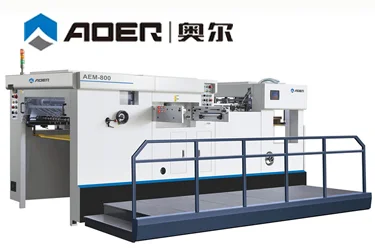
Batch sizes over 5,000 sheets. This is where automation shines. Once the machine is set up, it runs consistently at 5,000-7,500 sheets per hour. The same operator can run the machine while also handling quality checks and job prep for the next run.
Long, uninterrupted shifts. A motor doesn't get tired. Pressure stays consistent on sheet #4,000 just as it was on sheet #1. That means your waste rate stays flat throughout the day rather than climbing as operators fatigue.
Integrated waste stripping. The best automatics remove waste in-line. The sheet that comes off the delivery pile has finished cartons already separated from the waste matrix. That's not just speed—it's an entire labor step eliminated.
Repeat orders with job memory. Once you've dialed in the perfect settings for a specific carton—pressure, cutting depth, feeder timing, stripping configuration—the machine stores that profile. Next month when the reorder comes in, you load preset #12 and run. No re-dialing from scratch.
Lower operator skill requirement. Modern automatics use touchscreen interfaces with visual guides. An operator with basic training (3-5 days) can run production effectively. Manual presses require more nuanced feel—typically 2-4 weeks to become proficient.
The automatic trade-offs
Automation isn't free. The upfront investment is significant. Setup takes longer, so very short runs are inefficient. Floor space requirements are larger—a fully automatic with feeder and delivery stacker needs 2-3 times the footprint of a manual press. And when something goes wrong (misfeed, double-sheet, jam), troubleshooting is more complex than a manual machine where you can see everything immediately.
But again, these trade-offs only matter if your work doesn't fit the automatic's strengths.
Let me put these side by side without declaring a winner. The "best" depends entirely on your situation.
| Feature | Manual Die Cutter | Automatic Die Cutter |
|---|---|---|
| Ideal batch size | Under 2,000 sheets | Over 5,000 sheets |
| Setup time per job | 10-15 minutes | 20-30 minutes (including feeder) |
| Sustained speed | 300-500 sheets/hour | 3,000-7,500 sheets/hour |
| Waste removal | Separate manual step (10-20 sec/sheet) | In-line (automatic) on many models |
| Operator skill needed | Higher (2-4 weeks training) | Moderate (3-5 days training) |
| Job change frequency | Handles 10-15 changes/shift easily | Best with 5 or fewer changes/shift |
| Material flexibility | Excellent for tricky/warped board | Requires square, clean edges for auto-feed |
| Floor space | Compact (15-25 sq ft) | Larger (50-100 sq ft with feeder/stacker) |
| Typical price range (new) | 8,000−8,000−25,000 | 35,000−35,000−150,000+ |
| Used market availability | Widely available (5k−5k−15k) | Limited; more variable condition |
Shop A: The specialty printer
Runs 800-1,200 custom cartons per day. Average batch: 150 pieces. Materials range from recycled kraft to handmade textured board. Three manual presses. Owner's comment: "I looked at automatic. The setup time alone would kill me. By the time I got the feeder dialed in for this weird board, I could have run the whole job on manual."
Shop B: The pharmaceutical packaging supplier
Runs 2 million cartons per month. Average batch: 50,000 pieces. Two automatic die cutters running 16 hours/day. Production manager's comment: "Manual? We'd need twenty of them and forty people. Not realistic."
Both are successful. Both chose correctly for their work.
Many growing shops eventually run both types. The manual handles:
Samples and prototypes
Rush jobs under 500 pieces
Tricky materials that don't feed well automatically
Overnight emergency runs when the automatic is already scheduled
The automatic handles:
All production runs over 5,000 pieces
Repeat orders with stored presets
High-volume standard cartons
A corrugated converter I visited runs this exact model. One automatic handles 80% of their volume (the long runs). Two manual presses handle the other 20% (short runs, samples, weird materials). They didn't replace the manuals when they bought the automatic. They added to their capability.
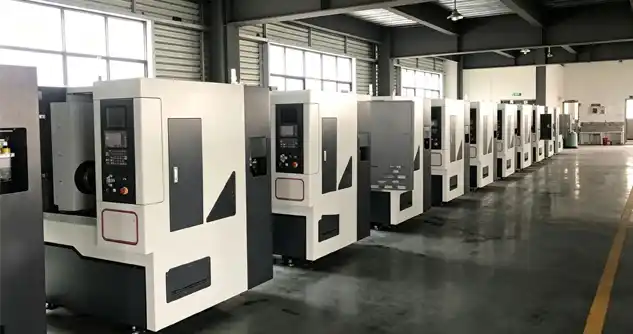
Instead of asking "which is better?", answer these five questions about your actual work:
1. What's your most common batch size?
Be honest. Not your ideal batch. Your actual one. If most of your orders are under 2,000, manual deserves serious consideration.
2. How many different carton designs per week?
More than 10? Manual starts looking attractive. Under 5? The automatic's setup time becomes less painful.
3. What materials do you run most?
Standard, flat, clean board? Either works. Warped, recycled, or super-thin specialty paper? Manual's feed flexibility is a real advantage.
4. What's your growth trajectory?
If you're turning down work because of cutting capacity, automatic solves that. If you have spare capacity on your current manual, you don't need to fix what isn't broken.
5. What's your operator situation?
Experienced die-cutters on staff? They'll be productive on either. Hiring entry-level? Automatic's simpler operation helps.
Manual die cutters aren't obsolete. They're the right tool for short runs, tricky materials, frequent job changes, and tight budgets. Thousands of successful packaging businesses run them every day.
Automatic die cutters aren't overkill. They're the right tool for long runs, repeat orders, high volume, and shops where labor is expensive or scarce.
The mistake isn't buying one or the other. The mistake is buying the wrong one for your work.
If you're currently running a manual and feeling pressure to "upgrade," do the math first. Calculate your actual setup time, run time, and waste on a typical week of orders. Compare that to what an automatic would deliver for the same orders. You might find the upgrade pays for itself in six months. You might find it never would.
And if you're shopping for your first die cutter, be ruthless about your real batch sizes. Don't buy an automatic because you hope to have long runs someday. Buy the machine that works for the work you have now—with room to grow.
For shops ready to compare specific models against their actual production numbers, review detailed specifications across manual and fully automatic configurations.
GET A QUOTE


 中文
中文 English
 Pусский
 Français
 Español