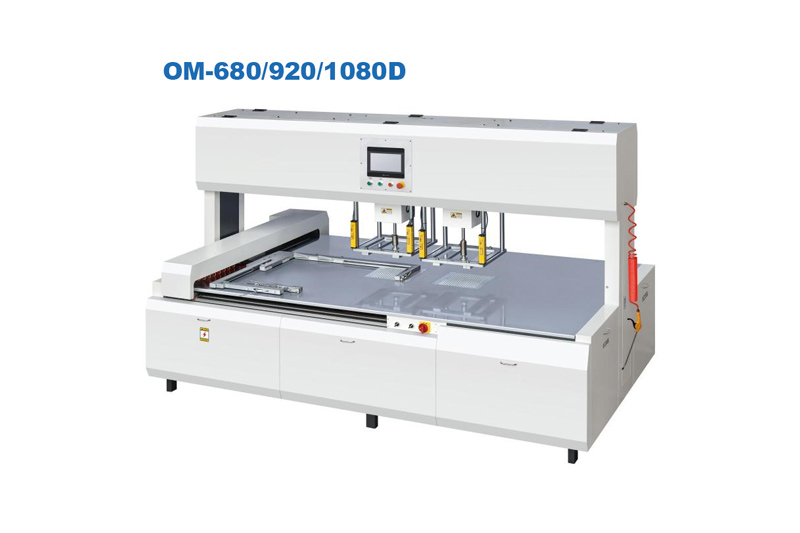
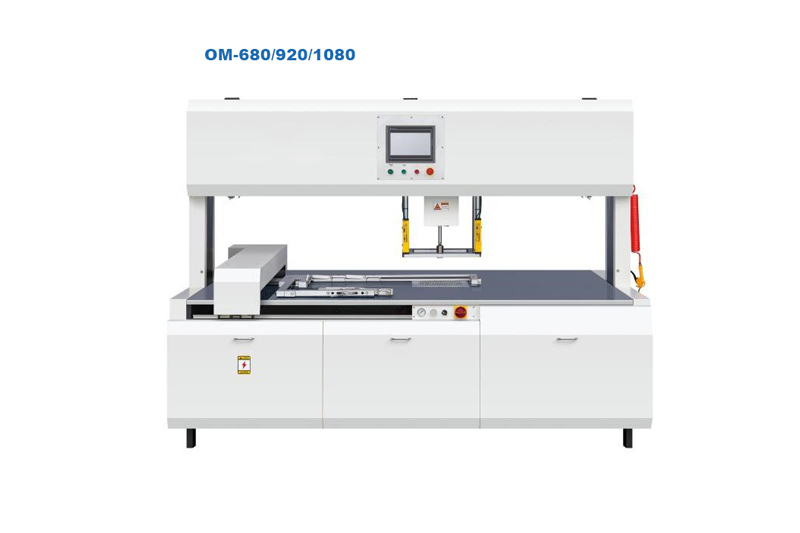
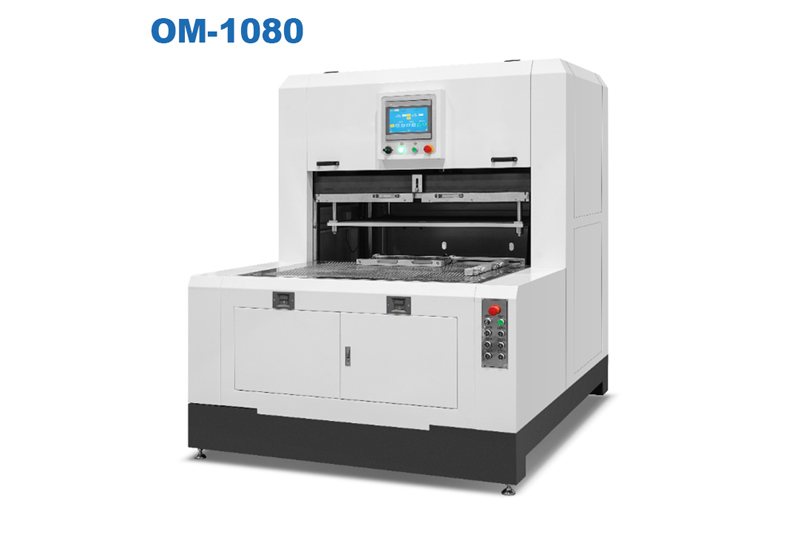
The alarm goes off at 8 AM. By 9, your warehouse has 1,200 orders to pack. By noon, that number will double. Somewhere between the tape dispensers and bubble wrap rolls, someone is manually folding cardboard blanks—or worse, cutting misaligned boxes that won’t close properly.
This is the quiet bottleneck no one talks about in e-commerce logistics.
While most fulfillment guides obsess over pick-and-pack speed, the actual starting point of any shipment—the carton itself—often gets ignored. You can have the fastest pickers in the region, but if your boxes don’t erect correctly or the die-cut flaps don’t align, everything slows down.
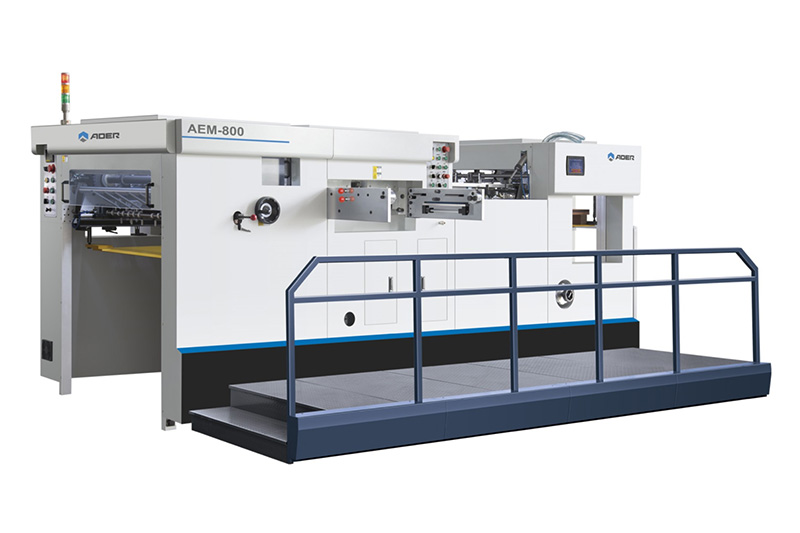
Three years ago, a medium-sized cosmetics subscription service shared their data with me. They were using pre-made RSC (regular slotted carton) boxes in five standard sizes. On paper, it was efficient. In reality, they were shipping air—using oversized boxes for small items—because their packing team didn’t have time to hunt for the exact size needed.
That “air” cost them an extra 0.47pershipmentindimensionalweightfees.Multiplythatby50,000orderspermonth,andyou’relookingatover0.47pershipmentindimensionalweightfees.Multiplythatby50,000orderspermonth,andyou’relookingatover280,000 annually lost to nothing but empty space.
The smarter approach? On-demand box erecting and die-cutting that lets you create the right size for each product. Not “close enough.” Not “we’ll add more padding.” But exactly what fits.
Let me walk you through a failure that happens more often than it should. Your die-cut machine runs a batch of 2,000 carton blanks. The crease lines look fine under shop lights. But when your packers start folding them on the line, every fifth box resists—the cardboard doesn’t want to bend along the crease. Workers apply extra force. Some boxes tear. Others end up with a diagonal fold that makes the lid sit crooked.
What went wrong? Creasing depth inconsistency.
A proper crease doesn’t cut the paperboard; it compresses the fibers along a precise line, creating a hinge. If the die-cutting pressure varies by as little as 0.2mm across the platen, some creases are too shallow (resists folding) while others are too deep (weakens the board).
According to a technical reference from TAPPI (Technical Association of the Pulp and Paper Industry), optimal crease compression should leave the board thickness reduced by 60-70% along the fold line—not less, not more.
How do you check this without expensive lab tools? Run a small batch, fold each box by hand, and listen. A good crease makes a clean “snap” sound when folded. A bad one either crinkles (too shallow) or cracks (too deep). Your packers’ hands will tell you the truth faster than any gauge.
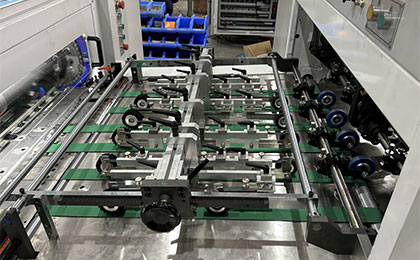
Here’s a reality that many small-to-mid e-commerce brands discover the hard way: Manual or semi-automatic die-cutting works fine until your daily order volume crosses 500 units. After that, the labor cost of folding and the waste from inconsistent cuts start eating your margins.
I spoke with an operations manager at a DTC furniture accessories brand last quarter. They were running two manual flatbed die cutters for their corrugated shipping boxes. Each machine required one dedicated operator. The team was producing 700 carton blanks per shift—but with a 6% reject rate due to slight pressure variations between operators.
That 6% doesn’t sound huge. But on a monthly volume of 18,000 boxes, that’s over 1,000 unusable cartons. Material cost, storage space, and disposal fees add up fast.
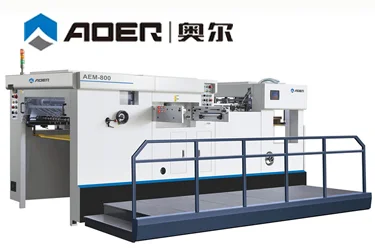
When they switched to a fully automatic die cutting machine, the reject rate dropped below 1% within two weeks. Not because the new machine was “stronger,” but because it removed the human variability from pressure application. The same settings on box #1 applied to box #1,000.
You’ve cut the box shape. You’ve creased the fold lines. Now you have a sheet full of perfectly formed carton blanks—still attached to the surrounding waste matrix via tiny uncut bridges. Removing that waste (called “stripping”) is often the most tedious, injury-prone step in the entire process.
Do it manually, and your workers spend 15-20 seconds per sheet picking out small cardboard scraps. Multiply that across a day, and you’ve lost hours to nothing but finger-work.
Automatic waste stripping is one of those features that seems minor on a spec sheet but transforms your production floor overnight. A machine that integrates stripping into the same cycle—cut, strip, stack—can cut your post-processing labor by 70-80%.
Several modern systems now include this as a standard configuration. You can review models with integrated waste removal that handle everything from thin cosmetic cartons to heavy corrugated sheets without manual intervention.
Your choice of die-cutting equipment depends heavily on what you’re cutting most often. The two main categories behave completely differently under pressure:
| Material | Typical Use | Die-cutting Challenge |
|---|---|---|
| Solid bleached board (SBB) | Cosmetic boxes, rigid gift boxes | Requires high precision; edge crush is visible if pressure is uneven |
| Corrugated (single/double wall) | Shipping cartons, e-commerce outer boxes | Needs deeper crease penetration; flutes collapse if pressure is too high |
A common mistake is buying a machine optimized for thin paperboard and then running corrugated through it. The result? Mushroomed flutes, weak folds, and boxes that don’t stay closed.
Conversely, using a heavy-duty corrugated cutter for thin cosmetic cardstock often leaves “kiss cuts” that don’t fully separate the waste matrix.
The best approach? Look for equipment with adjustable pressure ranges and interchangeable cutting plates. Some manufacturers now offer modular die-cutting stations that let you swap tooling in under 15 minutes—transforming from a precision paperboard cutter to a heavy corrugated processor without buying a second machine.
In traditional die-cutting, a tool change meant 40-60 minutes of downtime. Loosen bolts, lift heavy plates, realign the new die, test-run, adjust, test again. For a production line running two shifts, that’s two hours of lost output per day.
But newer designs have rethought this. Quick-release clamping systems and pre-registered die carriers reduce changeover time to 15 minutes or less. That doesn’t just save time—it changes your entire production strategy. You can now run smaller, more frequent batches without penalty. Morning: perfume boxes. Afternoon: shipping cartons for a flash sale. Same machine, different tooling, minimal downtime.
If your current setup takes longer than 20 minutes to change dies, you’re leaving money on the table every time you switch products.
One of the most expensive mistakes in die-cutting is buying a machine that’s either too small or incorrectly configured for your largest carton.
Measure your biggest product’s flattened blank size, not the assembled box dimensions. A box that becomes 400x300x200mm when assembled might have a die-cut blank of 800x700mm when laid flat. If your machine’s maximum sheet size is 820x620mm (like smaller entry-level models), you’ll never be able to produce that box in one piece.
The industry standard for mid-volume e-commerce packaging is the 1050x750mm format—large enough for most shoebox-sized cartons, fast enough for 7,500 sheets per hour. But if you’re doing furniture, appliance, or oversized product packaging, you’ll need to go larger. Some heavy-format machines handle sheets up to 1670x1210mm, enough for a flat-packed bookshelf or a large TV shipping box.
Here’s a practical guideline: Choose a machine whose maximum sheet size is at least 20% larger than your largest planned carton blank. That margin allows for registration marks, gripper margins, and waste trim without crowding the active cutting area.
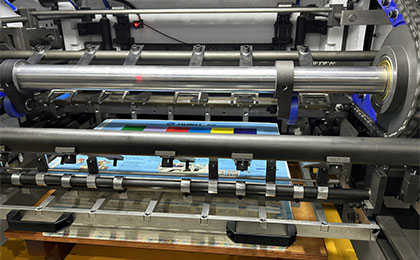
Die-cutting creates the flat blank. But the real efficiency gain happens at the erecting station—where that blank becomes a three-dimensional box. If your die cuts flaps that are slightly too long or creases that are slightly offset, the erecting machine (manual or automated) will jam. Every jam costs you 30-60 seconds of line stoppage.
This is why integrated thinking matters. The cutting precision directly dictates erecting reliability. A difference of 0.5mm in flap length doesn’t look like much on a flat sheet, but it becomes a 2mm gap when the box is folded—enough for tape to fail or lids to slide open.
The brands that succeed at scale are the ones who treat die-cutting and erecting as a single system, not two separate steps. If you’re planning to add automated erecting equipment in the future, make sure your die-cutter can maintain ±0.1mm registration across long runs.
You can compare precision specs across different formats to see which models are rated for consistent accuracy—especially important if you run mixed materials or frequent job changes.
E-commerce packaging is under more environmental scrutiny than ever. Dimensional weight fees, customer unboxing experiences, and sustainability pledges all push toward right-sized, minimal packaging.
But here’s the tension: The more you customize box sizes, the more die-cutting waste you typically generate. Unless your machine is precise enough to nest shapes efficiently on each sheet.
Modern computerized die-cutters can reduce sheet waste to under 5% (compared to 15-20% with manual layout). That’s not just good for the planet—it’s good for your P&L. Cardboard costs have risen 25-40% over the last three years in many regions. Every sheet you save goes straight to your bottom line.
If you’re still cutting boxes with manual or semi-automatic equipment, ask yourself: Is the time spent on rework, the waste from mis-cuts, and the labor for manual stripping really worth the upfront savings on equipment? For most growing e-commerce brands, the answer is no.
The move to automated, precise die-cutting isn’t about having the fanciest machine. It’s about giving your packing line a reliable starting point—every box, every crease, every time.
GET A QUOTE


 中文
中文 English
 Pусский
 Français
 Español