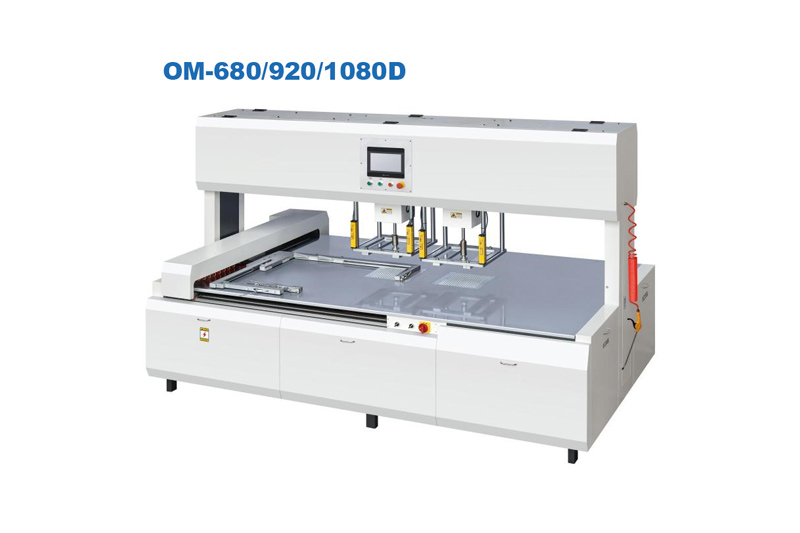
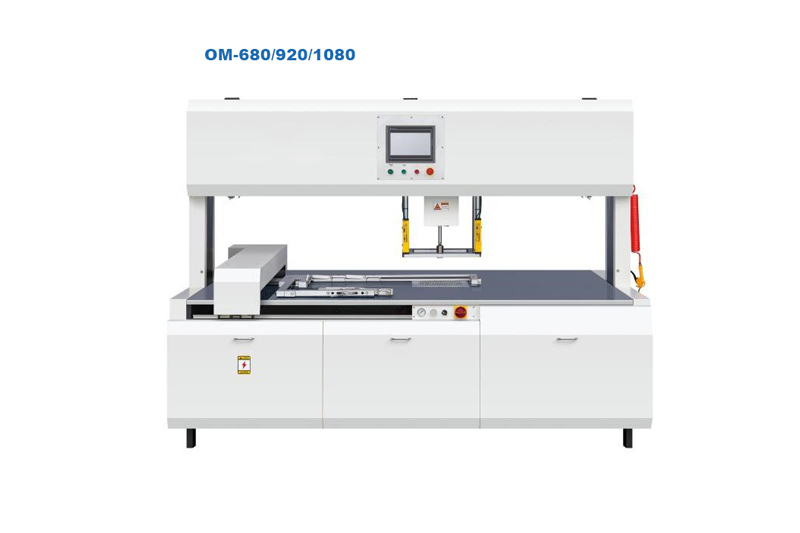
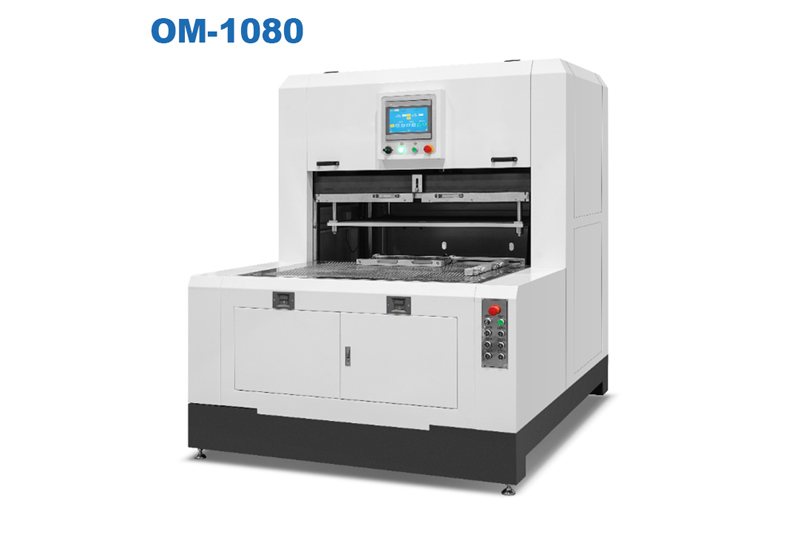
The sheet comes out of the press. To the untrained eye, it looks like a finished batch of folded cartons. But then your operator picks it up, walks to a separate table, and starts picking out tiny cardboard pieces one by one. Twenty seconds per sheet. Multiply that across an eight-hour shift, and you’ve lost nearly an hour to nothing but finger work.
That’s the hidden cost of standard die-cutting that never appears on the spec sheet.
Most packaging buyers focus on two numbers: sheet size and speed. But anyone who has actually run a production floor knows the real bottleneck isn’t the cutting stroke—it’s what happens after the cut. Waste stripping and blanking can eat up 15-30% of your total cycle time if your machine isn’t designed for it.
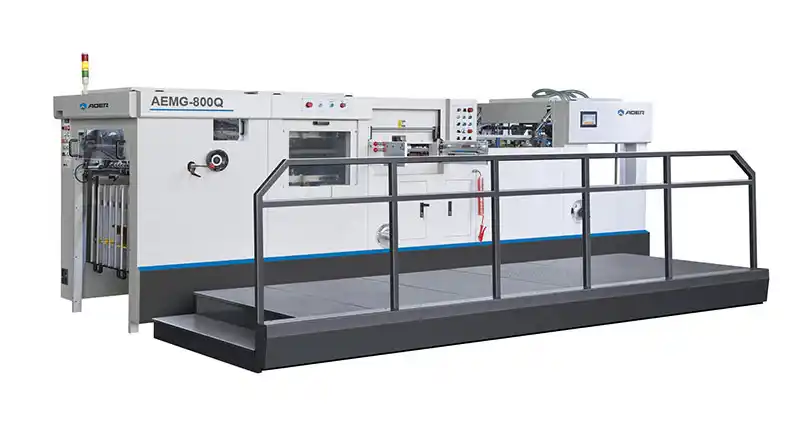
Let me clarify the terminology first, because the industry uses these words loosely.
A standard die cutter (sometimes called a plain flatbed die cutter) does exactly one thing: it cuts and creases the sheet. That’s it. After the cut, the sheet comes out with the finished carton shapes still connected to the surrounding waste matrix via small uncut “nicks.”
Removing that waste—called stripping—is a separate manual step. And if your cartons need to be fully separated from the sheet (as opposed to staying connected for delivery), that’s blanking: pushing the finished pieces out of the waste skeleton.
Some modern machines integrate stripping and blanking directly into the same cycle. Others don’t. The difference shows up in your labor costs, not your machine’s brochure.
I once visited a mid-sized folding carton plant that ran two conventional die cutters. Each machine produced 3,000 sheets per shift. Each sheet required about 18 seconds of manual stripping. That’s 54,000 seconds—or roughly 15 hours of pure manual labor—every single day just to remove waste.
Their solution? Three full-time employees dedicated to nothing but picking cardboard scraps. When they calculated it, stripping labor added $0.008 per carton. That sounds tiny until you multiply it by 2 million cartons a month. Then it’s $16,000 in wages for a job that adds zero value except to fix an incomplete machine cycle.
A system with automatic stripping eliminates that step entirely. The sheet exits the press with waste already removed, and the finished blanks are stacked or separated automatically. Those three employees can be reassigned to quality inspection or machine tending.
Here’s where many packaging buyers get tripped up.
For certain applications—like pharmaceutical blister packs or cosmetic cartons that ship flat—you actually want the cartons to stay connected to the waste skeleton. It keeps them organized during shipping to the filling line.
For other applications—like direct-to-ecommerce packaging where boxes are erected immediately—you want fully separated blanks.
A standard die cutter can’t do both without extra equipment. An integrated stripping and blanking system can switch between modes. Here’s how they compare:
| Feature | Standard Die Cutter | Integrated Stripping + Blanking |
|---|---|---|
| Waste removal | Manual, offline | Automatic, in-line |
| Blank separation | Secondary operation or manual break | Automatic ejection |
| Labor per shift | +1-3 full-time strippers | Zero dedicated stripping labor |
| Floor space | Machine + stripping table | Machine only |
| Changeover time | Same (tooling-dependent) | Same (tooling-dependent) |
| Suitable for complex shapes | Yes, but slower due to manual picking | Yes, faster due to automated waste knock-out |
Not all automatic stripping is created equal. I’ve seen machines that claim “auto stripping” but only push the waste partially loose—operators still need to flick it off with their fingers.
True automatic stripping uses a combination of:
Stripping pins or forks that push waste upward from below
Blank knock-out tools that eject finished cartons downward
Timed ejection synchronized with the cutting stroke
The best systems remove waste in the same cycle as the cut, so the sheet that comes off the delivery pile is ready to pack or ship.
If you’re evaluating equipment, ask for a demo with your actual carton design. Complex shapes with small internal cutouts (like hang holes or windows) are the real test. A machine that strips a simple rectangular box easily might choke on a intricate pharmaceutical blister card.
Let me be balanced here. Standard die cutters aren’t obsolete. They’re still the right choice for certain scenarios:
Very short runs (under 500 sheets) where setup time for stripping tools isn’t worth it
Prototyping and sampling where you’re still finalizing the design
Shops with extremely cheap labor where manual stripping cost is negligible
Oversized formats where integrated stripping systems aren’t available
But for medium-to-high volume production—anything above 5,000 sheets per week—the math tilts hard toward integrated systems. The labor savings alone typically pay back the price difference within 6-12 months.
Here’s a scenario I’ve seen play out dozens of times.
A packaging manager buys a standard die cutter based on the speed spec: 7,000 sheets per hour. Great, they think. That’s plenty.
But on the actual production floor, that machine never runs at 7,000. Why? Because the stripping table can’t keep up. The machine finishes a sheet in 0.5 seconds, but stripping takes 18. So the machine sits idle, waiting for the operator to finish picking waste.
The true throughput becomes the slower of the two steps—usually stripping. That 7,000 sheets/hour machine effectively runs at 200 sheets/hour if stripping is manual.
An integrated system removes that mismatch. The machine runs at its rated speed because waste removal happens in parallel with the cutting cycle, not after it.
If you’ve decided that automatic waste removal makes sense for your operation, here are the specific features to evaluate:
1. Stripping pin configuration
Can the pins be repositioned for different carton layouts? Fixed pins are cheaper but limit flexibility. Adjustable pins cost more but handle mixed production.
2. Blank knock-out tooling
For fully separated blanks, you need dedicated knock-out tools that push cartons down through the waste skeleton. Some systems use spring-loaded fingers; others use air jets. Air jets work better for lightweight materials but can scatter small cartons.
3. Waste conveyance
Where does the removed waste go? The best systems have a conveyor belt or vacuum waste extraction that deposits scrap directly into a baler or bin. Otherwise, someone still needs to sweep waste off the floor.
4. Tool change impact
Does adding stripping tooling extend your die changeover time? Quick-change stripping systems can swap pins and knock-outs in under 10 minutes. Others add 30+ minutes to every job change.
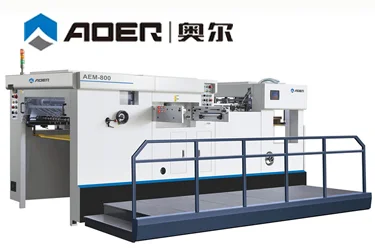
You can review models with integrated waste handling that include adjustable stripping configurations and quick-change tooling.
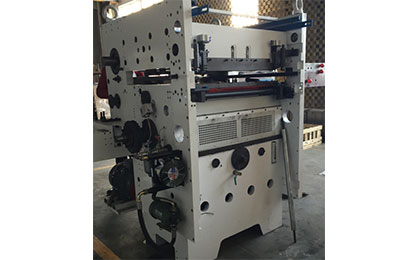
A corrugated packaging supplier I spoke with last year ran three standard die cutters producing e-commerce shipping boxes. Their process: cut, then manually strip waste at a separate station. Each shift required two dedicated strippers per machine—six people total.
They replaced one of the three machines with an automatic die cutting machine that included in-line stripping and blanking. That single machine now handles the same volume as two of their old units, with zero dedicated stripping labor. The two remaining standard machines run alongside it for overflow and specialized jobs.
Their payback period? Eight months. After that, the labor savings went straight to margin.
Not all materials strip the same way. Here’s a quick guide based on field experience:
| Material | Manual Stripping Difficulty | Integrated Stripping Feasibility |
|---|---|---|
| Thin paperboard (under 300gsm) | Easy—waste breaks cleanly | Very high—works well |
| Standard folding carton (300-500gsm) | Moderate—requires consistent pressure | High—standard configuration |
| Heavy chipboard (500-800gsm) | Difficult—waste is stiff | Moderate—needs heavy-duty pins |
| Corrugated (single wall) | Very difficult—flutes catch | Moderate—special stripping tools required |
| Corrugated (double wall) | Extremely difficult—almost impractical | Low—often not recommended |
If you’re running heavy materials, don’t assume integrated stripping will work out of the box. You’ll need to verify with the manufacturer that their system can handle the thickness and flute structure.
Before you choose between a standard die cutter and an integrated stripping/blanking system, answer these three questions honestly:
1. What’s your weekly sheet volume?
Under 2,000 sheets? Standard may be fine. Over 5,000? Integrated will pay for itself.
2. How complex are your carton shapes?
Simple rectangles strip easily either way. Intricate shapes with multiple small cutouts benefit dramatically from automated stripping.
3. What’s your labor cost and availability?
Can you find reliable workers willing to do repetitive picking work for eight hours? In many markets, that’s becoming harder every year.
I’ll leave you with a quote from a production manager I respect, who runs both types of machines in his facility:
“Standard die cutters are like buying a car without air conditioning. They work fine on cool days. But on a hot July afternoon, you’ll regret saving the money. Stripping is the July afternoon of packaging. If you run volume, get the integrated system. Your operators will thank you—and your P&L will too.”
The decision isn’t about which machine cuts faster. It’s about which machine keeps your line moving without hidden labor costs. For many growing packaging operations, integrated stripping and blanking isn’t a luxury. It’s the difference between scaling profitably or hiring more pickers.
You can compare automatic stripping configurations across different format sizes to see which matches your material types and volume requirements.
GET A QUOTE


 中文
中文 English
 Pусский
 Français
 Español