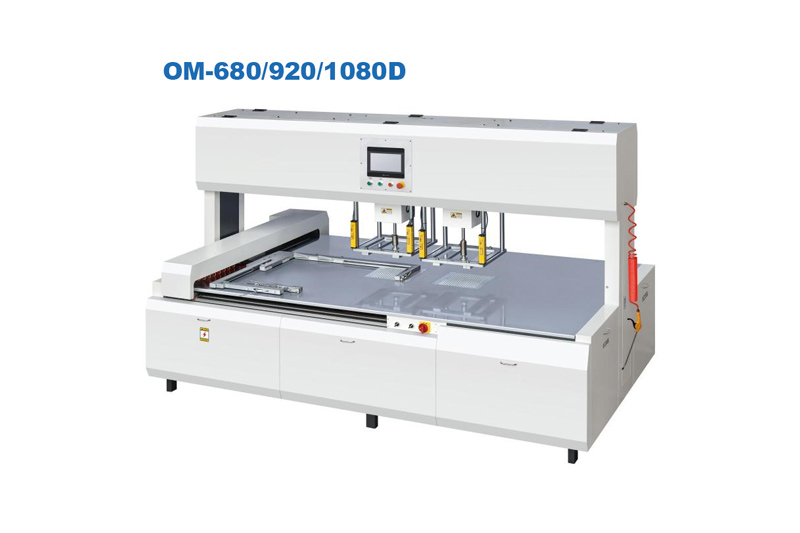
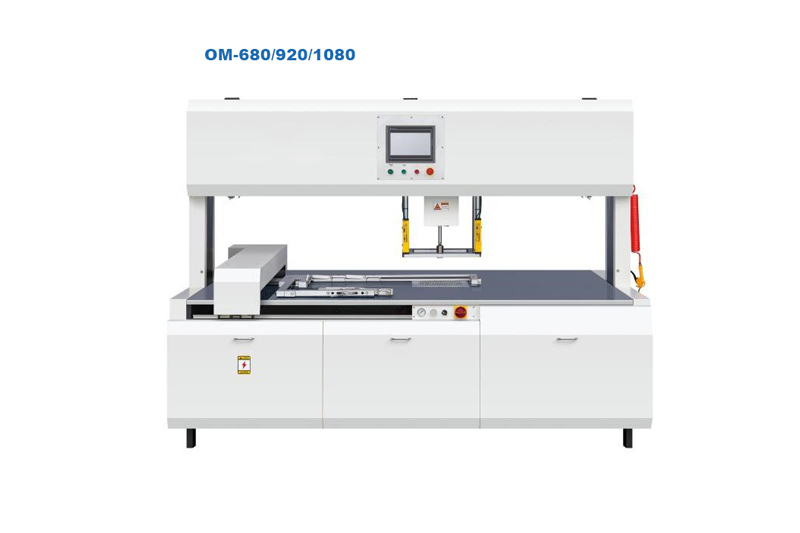
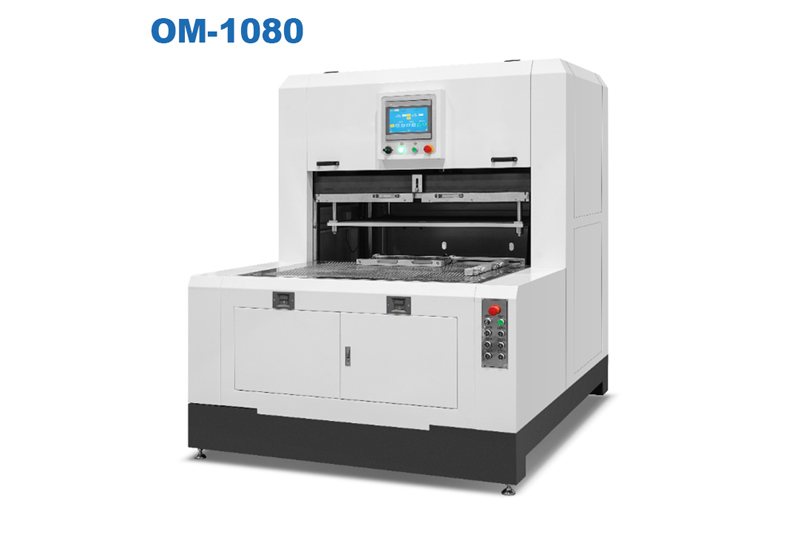
Ask any production manager in a packaging or bookbinding shop what slows down a luxury book cover order, and you will often hear the same answer: handoffs. First the cover gets creased on one machine. Then it moves—sometimes across the shop floor—to a foil stamping station. Each move adds labor, risk of misalignment, and hours to the lead time.
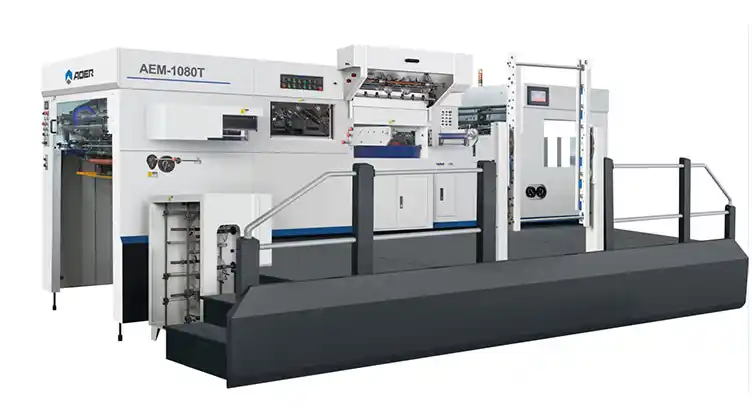
This explains why more finishing departments are asking the same question: can one machine reliably handle both book cover creasing and hot foiling in a single pass? The short answer is yes, but the more useful answer is “it depends on your material range, batch sizes, and the precision you expect.” This article walks you through what integrated creasing and foiling actually means for a production floor, where the trade-offs hide, and how to decide whether a combined approach fits your workflow.
When a finishing line performs both creasing and hot foiling on the same machine without moving the sheet to a different station, that is true one-pass integration. But two very different technical approaches sit under that label.
| Feature | Sequential Flatbed Integration | Dual-Section Rotary Integration |
| How it works | Same flat bed performs creasing first, then foiling (or vice versa) using different tooling zones | Separate rotary or flat modules linked by a common feeder and delivery system |
| Typical sheet size range | 750×520 mm up to 1670×1210 mm | 800×620 mm up to 1300×980 mm |
| Speed (sheets/hour) | 3,000–7,000 (slower when foiling heavy solids) | 5,000–7,500, more stable for medium runs |
| Best for | Thick board (800–1500 gsm), short-to-medium runs | Medium-to-long runs, thinner covers (300–600 gsm) |
| Make-ready time | 20–45 minutes (tools change together) | 15–30 minutes, but two setups required |
A 2023 technical overview from Printing United Alliance notes that “flatbed integration remains the dominant choice for heavy board and deep embossing, while modular systems show higher throughput for standard commercial runs.” The implication for book covers: if you routinely work with hardcover boards above 2mm thickness, flatbed-style integration tends to deliver more consistent crease depth. Conversely, if your mix favors softcover or paperback books with foil accents, a modular or dual-section design often returns higher daily output.
What this means for your production floor: Integrated does not automatically mean faster. For thick book covers, the real gain is eliminating registration errors, not necessarily boosting raw speed. A 0.5mm misalignment between crease and foil—common when moving sheets between separate machines—ruins an entire batch of premium book covers. One-pass integration removes that risk entirely.
If your production requires handling both 1.5mm paperboard and 3mm greyboard, learn how Foiling designs manage different material thicknesses without daily recalibration: see automatic hot stamping machine.
Integration solves misalignment, but it introduces its own set of compromises. Knowing these in advance prevents choosing a configuration that fights your daily workflow.
When a machine must reach operating temperature before every run (typically 10–15 minutes for multi-zone heated platens), short runs waste disproportionately more foil and warm-up time. According to data from Idealliance, finishing changeovers under 300 sheets account for nearly 40% of foil waste in mixed-product shops. For book cover runs shorter than 500 pieces, a separate, always-ready manual foiling station may actually be more economical despite the extra handling step.
Heavy creasing pressure can slightly flatten foil gloss, especially on coated or UV-treated covers. Integrated machines manage this through independent pressure zoning—the same platen applies higher pressure in crease areas and lower, more uniform pressure in foil areas. Without this zoning, you may face a choice between readable creases and glossy foil.
Not all integrated designs accept thick book board. As the Binding Industries Association notes in its 2024 finishing equipment guidelines, “flatbed machines with frame construction rated to at least 2500kN of cutting pressure are generally required for consistent scoring of boards above 2mm.” Verify that the machine’s frame material (e.g., H250 cast iron) and bearing type (bronze alloy is more durable for sustained heavy loads) match your thickest book cover stock.
If your book covers use multiple foil colors (gold, silver, holographic) in the same shift, a single-station integrated machine requires removing and reloading foil rolls for every color change. Some high-volume configurations add a second foil unwinder—a feature worth prioritizing if you regularly run three or more foil colors per week.
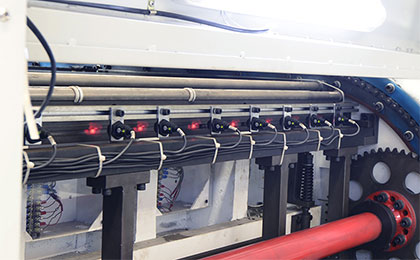
Instead of asking “which is best?”, ask “which integration type fits my specific volume and material range?” The decision table below offers a quick diagnostic.
Under 1,500 covers/week → Separate manual creasing + foiling may be more cost-effective unless misalignment rates exceed 5%.
1,500–6,000 covers/week → Sequential flatbed integration delivers the best balance of quality and uptime.
Over 6,000 covers/week → Modular or dual-section integration reduces per-sheet cost noticeably.
≤ 1.5 mm (softcover range) → Most integrated machines work well.
1.5–3 mm (standard hardcover) → Requires frame pressure ≥2500kN and a robust feeding system.
>3 mm (premium rigid boxes/luxury books) → Verify the machine’s stated maximum rule height and cutting plate thickness (7mm is typical for heavy-duty flatbed designs).
Single foil color, applied to >80% of covers → Single-station integration is ideal.
Three or more foil colors weekly → Seek a model with quick-change foil mandrels or dual unwinders.
Why this matters: A shop producing 8,000 softcover notebooks weekly with simple spine foil needs a very different machine than a boutique bookbinder making 300 handcrafted leather-bound journals with multi-color foiling. One-size-fits-all recommendations fail here.
For production environments that combine book covers with rigid boxes and luxury packaging, see how finishing workflows are designed for mixed short runs: explore integrated solutions for mixed premium packaging.
Consider a mid-sized printing company producing 4,000 hardcover photo books per week. Cover materials range from 2mm greyboard to 2.8mm recycled board, and each cover requires both a deep crease (for the spine hinge) and gold foiling on the front panel.
Before integration, The company ran creasing on an older ML-930 manual machine, then moved sheets to a separate TYMA-930 hot foil stamper. Registration errors affected 7–9% of covers, most of which could only be downgraded or scrapped. Total labor for two machines: 11 operator hours per shift.
After switching to a flatbed integrated model, creasing and foiling completed in one pass. Registration errors dropped below 1.5%. Operator hours fell to 6 per shift. However, short runs under 200 covers became marginally more expensive per sheet due to warm-up time, so the shop kept a separate manual stamper exclusively for samples and trial runs.
The key insight: integration did not fully replace the separate machine; it redefined when each machine is used. Batch sizes above 400 covers go to the integrated line. Smaller batches and proofs stay on the manual stamper.
Two external references can help ground your equipment discussions in industry benchmarks rather than marketing claims.
The ASTM D751 standard (coated fabric durability) and ISO 12636 for printing substrates provide measurable definitions of acceptable foil adhesion. While not every finishing supplier quotes these directly, asking “Does your temperature control system maintain ±1°C at the platen surface?” indirectly tests adherence to the consistency required by these standards.
According to research published in Printing and Graphic Arts (2023), “temperature variation across the foil platen directly correlates with edge sharpness; a gradient exceeding 4°C produces visually detectable feathering on uncoated book cover stocks.” An integrated machine with zoned heating (e.g., eight independently controlled zones) directly addresses this documented failure mode.
EN 61496 and ISO 13849 define safety requirements for electro-sensitive protective equipment (light curtains) and control system reliability. In many regions, integrated finishing lines must meet these to be legally operated without additional guarding retrofits. Verifying compliance upfront avoids expensive post-installation modifications.
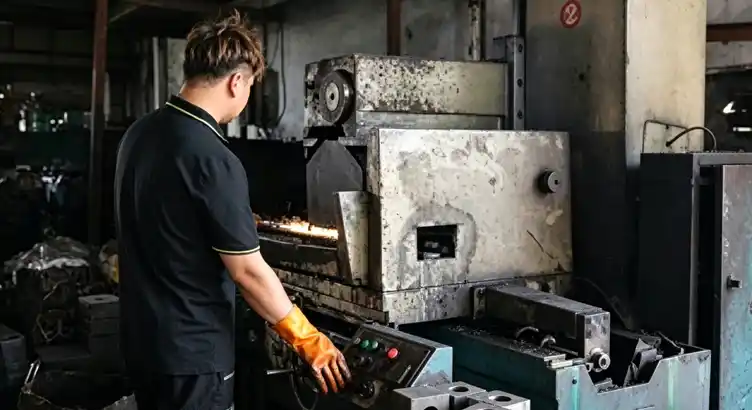
You now have a structured way to evaluate integrated book cover finishing: start with your weekly volume and thickest board, then decide between sequential flatbed or modular integration, and finally check compatibility with your foil color frequency.
The final step is mapping these requirements onto specific technical specifications. Different machine classes emphasize different strengths:
For heavy board and deep creasing → Pay attention to frame material (H250 cast iron), peak pressure (≥3000kN), and cutting plate thickness.
For high-volume softcover production → Prioritize feeding system speed (above 7,000 S/H) and quick-change foil loading.
For mixed short runs → Look for low warm-up time, manual override options, and separate make-ready modes.
Once you have clarified your required board thickness and volume, comparing specific configurations becomes the logical next step. To understand how to size an automatic feeder for mixed cover materials, read our guide.
Understanding Crease Pressure and Material Memory
Five Signs Your Post-Press Line Needs a Feeder Upgrade
Short-Run Luxury Packaging: Batch Size Breakeven Analysis
GET A QUOTE


 中文
中文 English
 Pусский
 Français
 Español