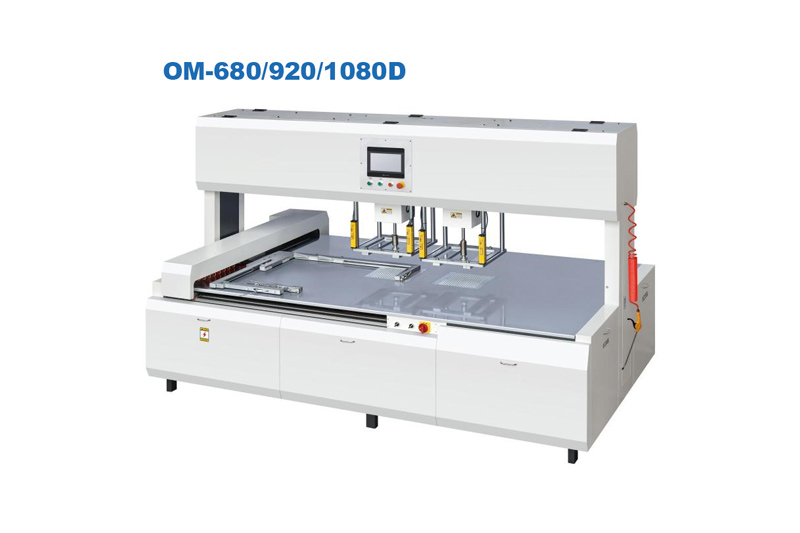
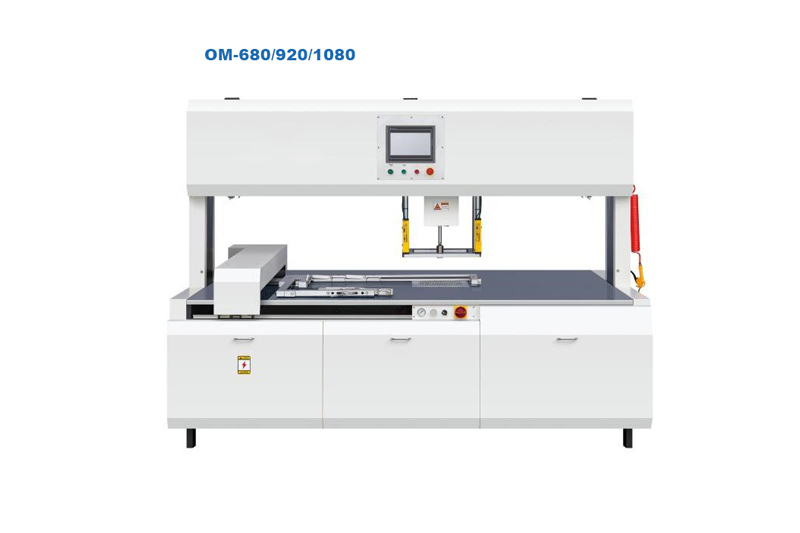
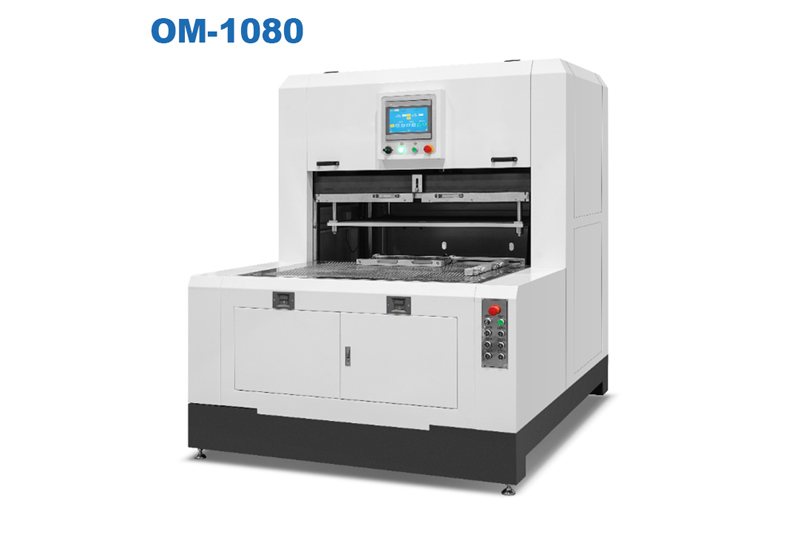
For manufacturers struggling with unstable feeding efficiency, material misalignment, and rising labor costs in die cutting workflows, automatic feeding systems serve as the core upgrade to stabilize daily output. Paired with an Automatic Die Cutting Machine, these feeding structures break the limits of manual material placement, delivering steady operation across multiple industrial segments while cutting down repetitive labor burdens. Based on 2025 industrial automation data released by the International Packaging Machinery Association, over 68% of medium-to-large die cutting factories have upgraded their feeding modules, proving that automated feeding is no longer an optional accessory but a necessary upgrade for standardized production. Many factory managers overlook the scenario matching of feeding equipment, leading to idle high-cost hardware or frequent production errors; clarifying applicable scenarios can help businesses lock in targeted transformation directions and maximize equipment value.
Packaging manufacturing is the most mainstream application field for automated die cutting feeding equipment, covering folding cartons, gift boxes, food packaging shells, and daily commodity outer containers. Most packaging materials are thin paperboards, corrugated sheets, and coated paper, which are lightweight and prone to offset when manually stacked and fed. In high-volume order cycles, workers need to repeatedly sort and position raw materials, and long-term repetitive operations inevitably cause fatigue, resulting in inconsistent cutting sizes and high defective rates.
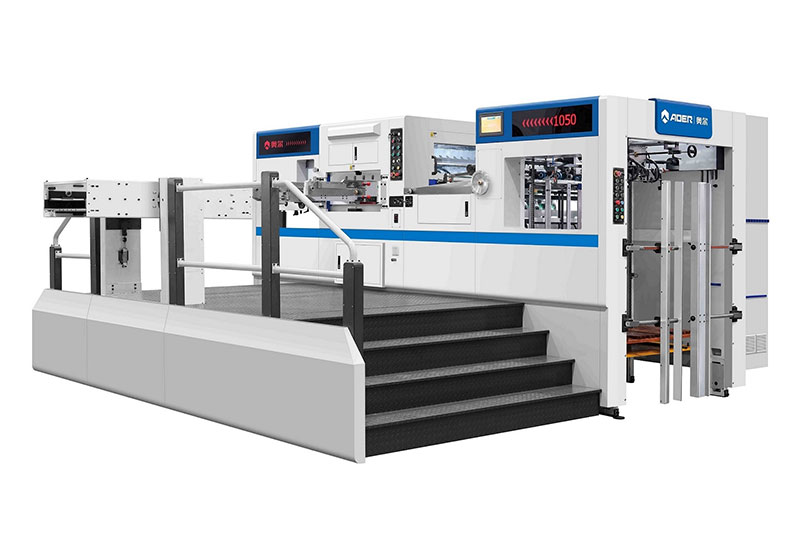
Aoer’s customized feeding modules are designed for the thickness differences of packaging materials, equipped with intelligent anti-offset sensors and layered material separation structures. This design avoids sheet adhesion and stacking jams that often occur in traditional feeding methods. For enterprises with mixed production of multiple packaging specifications, the adjustable feeding speed and spacing settings greatly shorten the model switching cycle.
Self-adhesive labels, plastic film stickers, and flexible fabric stickers have always been tricky materials in die cutting processing. These soft, easily stretched materials are difficult to control in manual feeding, with wrinkles, stretching deformation, and edge warping affecting the final cutting accuracy. Small batch customized label orders seem simple, but frequent material replacement requires flexible feeding equipment to coordinate.
High-precision roll material automatic feeding accessories perfectly fit flexible material processing demands, achieving constant-tension feeding and real-time deviation correction. Whether it is narrow-width electronic product labels or wide-width advertising printing stickers, the system can maintain stable material transmission speed. Unlike rigid materials, flexible feeding requires softer roller materials to prevent surface scratching, a detail that many ordinary universal feeding devices ignore in design. This subtle design difference directly determines the yield rate of high-value label products and becomes a key factor for differentiated competition in the printing and labeling industry.
The non-metallic accessory manufacturing industry, including automotive interior sound insulation cotton, sealing gaskets, foam shock-absorbing materials, and leather decorative parts, has higher requirements for feeding stability and load-bearing capacity. These industrial auxiliary materials are thick, hard, or elastic, and manual single-piece feeding is slow and unable to match continuous die cutting rhythm, seriously restricting daily output.
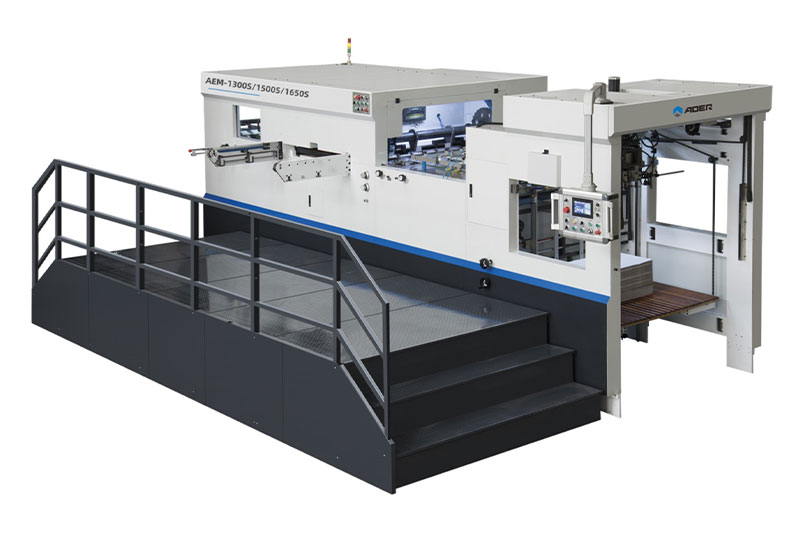
Heavy-load automatic feeding systems can carry thick multi-layer materials and complete continuous feeding of irregular sheet parts. In the automotive supporting industry with strict quality inspection standards, the fixed-distance feeding function ensures uniform cutting specifications of each accessory, reducing subsequent screening pressure. Industrial accessory orders often feature long delivery cycles and stable demand, making them highly suitable for long-term continuous operation of automated feeding equipment, helping factories compress unit production costs and stabilize long-term order profits.
Many people mistakenly believe automatic feeding is only suitable for large-scale mass production, which is a narrow understanding formed by outdated equipment cognition. In fact, with the upgrading of miniature intelligent feeding components, flexible feeding systems have begun to be widely used in small-batch customized die cutting services, such as handmade greeting cards, creative paper crafts, non-standard sponge liners, and special leather products.
These customized orders have diverse material types and frequent style changes, requiring feeding equipment with fast parameter adjustment and strong compatibility. The lightweight adjustable feeding structure launched by Aoer can quickly switch between thin paper, thick leather, and porous special materials, without complex debugging and disassembly. It balances operational flexibility and basic automation needs, solving the pain point of low efficiency of pure manual feeding in small workshops.
To accurately judge whether it is worth introducing automatic feeding systems, we need to objectively compare manual feeding, semi-automatic auxiliary feeding, and fully automatic integrated feeding modes, combining actual production costs and operational pain points.
Manual feeding relies entirely on workers to place and recycle materials, with ultra-low initial investment and suitable for micro-factories with orders below 500 pieces per day. However, its obvious drawbacks are low efficiency, large manual errors, and difficulty in recruiting long-term skilled operators in recent years, leading to hidden rising labor costs. Semi-automatic feeding only realizes single-link material transportation, still requiring manual assistance for sorting and positioning, with limited efficiency improvement and poor compatibility with special materials.
In contrast, the complete set of automatic feeding and cutting collaboration solutions represented by the Automatic Die Cutting Machine realizes full-process unmanned intervention after parameter setting. Although the initial purchase cost is higher, it has obvious advantages in long-term operation: 3-5 times higher feeding efficiency than manual operation, a defective rate controlled below 1.2%, and 40% reduction in labor input according to actual factory test data. For mid-sized enterprises in the expansion stage, this cost recovery cycle is usually controlled within 18 to 24 months, with far more long-term benefits than short-term cost savings.
Different application scenarios correspond to completely different feeding system configurations, and blind pursuit of high-standard full-automatic equipment will cause functional redundancy and capital waste. First of all, clarify the main processing materials: thin paper and flexible labels need high-precision low-tension feeding, while automotive foam and leather accessories require heavy-load anti-extrusion structures.
Second, reasonably match production capacity: large packaging assembly lines can choose high-speed continuous feeding equipment, and customized processing workshops are more suitable for adjustable low-speed flexible feeding modules. In addition, later maintenance and after-sales adaptation cannot be ignored. Brand equipment with localized technical support can quickly solve feeding jams, sensor failures, and other common faults, avoiding long-term production shutdown losses. When screening equipment brands, focusing on modular design can facilitate later partial component replacement and function upgrade, greatly extending the service life of feeding systems.
With the continuous advancement of intelligent manufacturing technology, die cutting feeding systems are evolving toward intelligent identification and multi-material universal adaptation. The single fixed feeding mode in the past is gradually eliminated, and new equipment is integrating visual recognition and automatic material induction functions, which can independently identify material specifications and automatically adjust feeding parameters.
Combined with digital production management systems, the feeding data of each shift can be recorded in real time, providing data support for production scheduling and cost optimization. As environmental protection and energy consumption control policies become stricter in various industries, energy-saving and low-noise automatic feeding structures will also become the standard configuration of new equipment. For die cutting processing enterprises, seizing the opportunity of phased automation upgrades and matching feeding equipment according to scenario characteristics is the key to maintaining market competitiveness in the increasingly segmented processing industry.
GET A QUOTE


 中文
中文 English
 Pусский
 Français
 Español