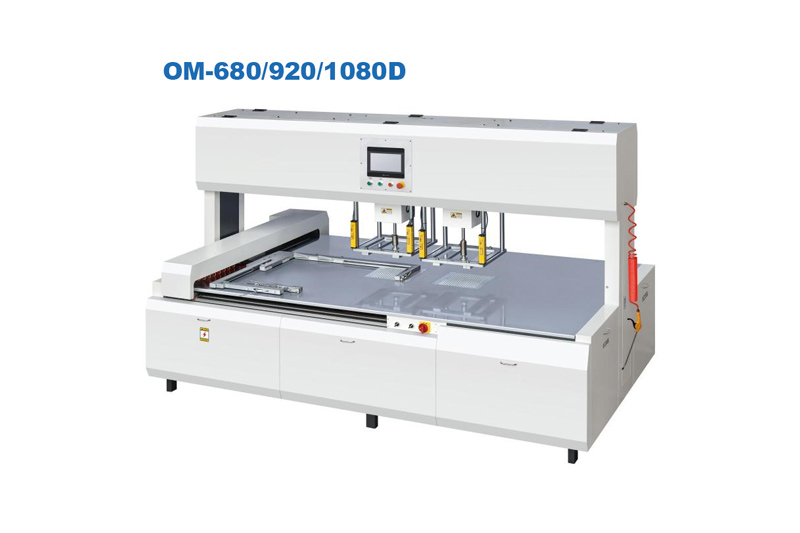
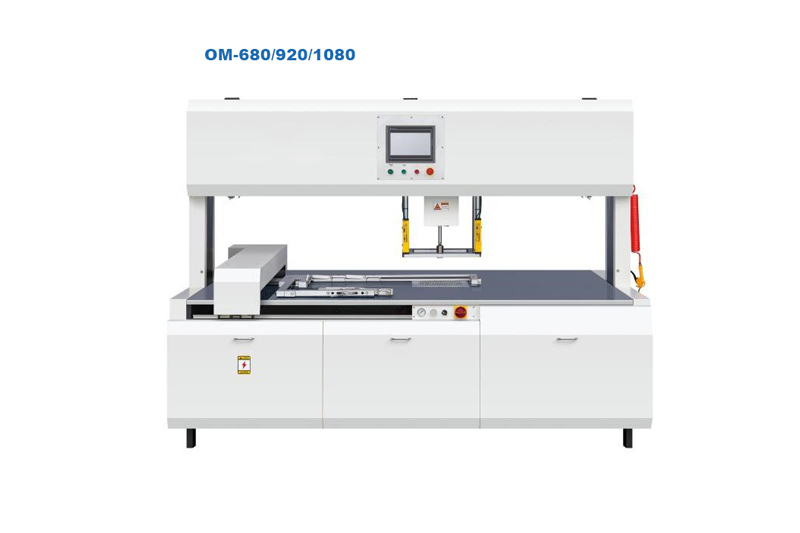
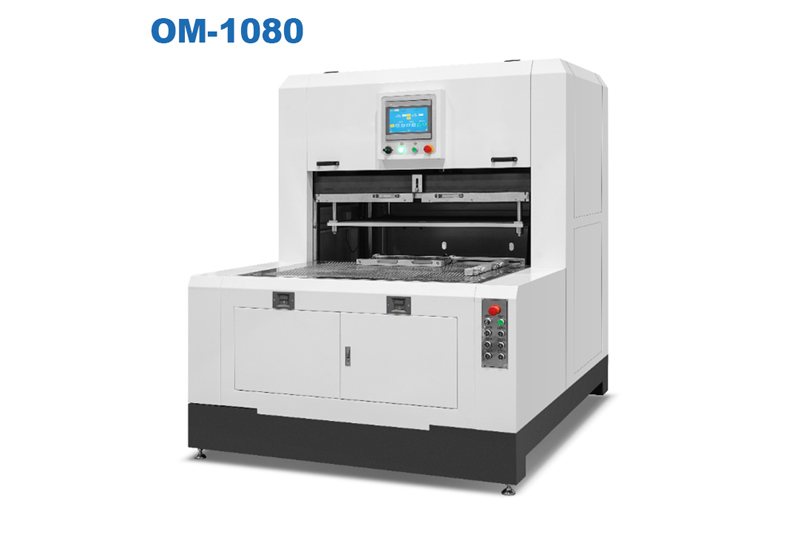
Your die cutting press starts every job the same way: sheets go in, finished parts come out. But what happens at the very first step—getting those sheets into the machine—determines everything that follows. If the feeder is struggling, the rest of the line suffers. Jams multiply. Output drops. Operators spend more time clearing misfeeds than monitoring quality.
The feeder is often the most overlooked component in a post-press line. It does not cut, crease, or stamp—it just moves material. But when it stops moving material reliably, the entire production line stops with it.
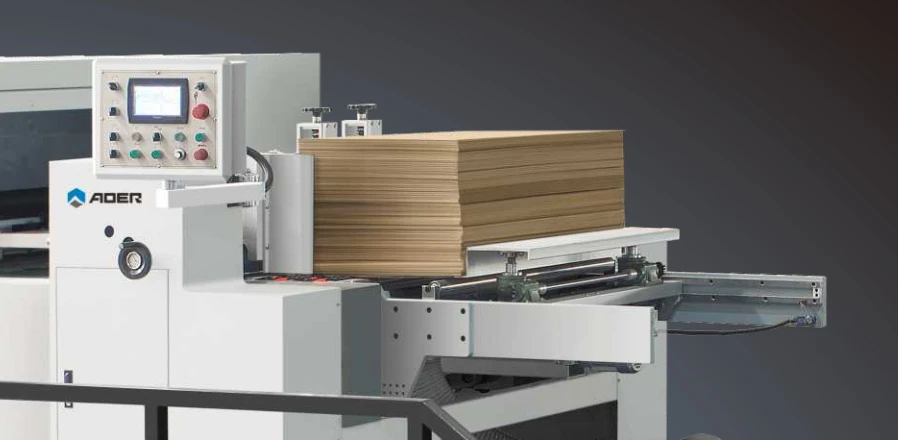
This article walks through five clear signs that your current feeder configuration is costing you time, money, and opportunities—and what to look for when considering an upgrade.
Walk up to any die cutting press and watch the operator for ten minutes. If they are reaching into the feeder section more than once or twice during that window—clearing double-sheets, repositioning skewed material, or unjamming misfeeds—you have a feeder problem.
| Symptom | What It Means | Hidden Cost |
|---|---|---|
| Frequent double-sheet detection stops | Feeder lacks a reliable separation mechanism | Lost production time; operator frustration |
| Sheets entering skewed | Poor alignment or worn feeder components | Misregistered cuts; wasted material |
| Inconsistent feeding on different stock types | Feeder lacks adjustability for material variation | Limited job flexibility; rejects |
| Manual intervention is needed for every few sheets | Feeder suction or grip is insufficient | High labor cost per sheet |
Data from the U.S. Department of Labor’s Occupational Safety and Health Administration (OSHA) shows that mechanical power presses and die cutting equipment appear consistently in severe injury citations. In one documented case, an employee sustained an amputation while unjamming a die cutter. Every time an operator reaches into the feeder to clear a jam, they are exposed to the pinch points and moving parts that make these machines dangerous. A feeder that runs cleanly is not just a productivity issue—it is a safety issue.
Older or basic feeder designs lack the precision needed for today’s production demands. A feeder head that cannot reliably separate sheets—whether because of worn suction cups, inadequate blower pressure, or a design that does not handle the specific board you are running—will generate misfeeds on every batch.
Modern feeder systems incorporate features that dramatically reduce misfeeds:
Precision feeder heads with adjustable suction nozzles that accommodate different paper shapes and thicknesses
Double-sheet detectors that catch misfeeds before they enter the press, not after
Skew and accumulated paper detection with auto-stop function that halts the machine when sensors detect problems
Anti-wear PU press rollers and brush wheels that maintain feeding accuracy over time
What this means for your shop: A feeder that runs cleanly for 95% of your jobs frees the operator to monitor cut quality, manage waste, and prepare the next job—instead of wrestling with the machine. One shop documented in lean manufacturing research achieved a 35% reduction in setup time after implementing SMED methodologies. While this example comes from a printing line, the principle applies directly to feeder-related downtime: every minute saved on clearing jams is a minute of productive capacity regained.
For shops evaluating feeder options that can handle a wide range of materials with minimal misfeeds, see how different feeding configurations are designed for specific material types: review feeding system configurations across automatic die cutting machines.
If your shop started with a narrow range of materials—say, standard 400 gsm paperboard for the same five box designs—your feeder was probably chosen for that specific job. But as your business grew, you started running thicker board, thinner paper, coated stocks, maybe even corrugated. The feeder that worked fine for the old mix now struggles with the new one.
| Material Type | Feeder Challenge | What Happens When Feeder Can’t Keep Up |
|---|---|---|
| Thin paper (under 200 gsm) | Sheets flutter; suction grabs multiple sheets | Double-sheet stops; torn edges |
| Thick greyboard (over 2mm) | Sheets are heavy; feeder lacks grip | Misfeeds; sheets fail to advance |
| Corrugated board | Irregular surface; feeder head loses suction | Jams; skewed entry |
| Coated/laminated stocks | Surface friction changes; feeding inconsistent | Position variation; rejects |
According to TAPPI’s Technical Information Paper on paper feeding, “a minimum value of coefficient of friction is required to prevent double-feeding of any sheets”. Different materials have different friction coefficients—and when your feeder was designed for one range, it may not have the adjustability to handle others.
AOER’s automatic die cutting machines feature feeder systems designed for material flexibility:
Lead edge feeders specifically engineered for thick paperboard and corrugated board
Top suction feeders that handle a wide range of paper, paperboard, and plastic sheet
Manual-automatic dual-use feeders that allow hand feeding for materials that cannot be fed automatically due to quality or shape issues
Adjustable nozzle angles and heights to suit different paper shapes
For finishing departments that regularly switch between thin paper and heavy board, understanding how feeding systems handle different material classes helps when configuring your line for mixed production: explore feeding solutions for mixed-material finishing workflows.
Take a closer look at your production data. Your press is rated for a certain speed—say, 7,000 sheets per hour. But your actual output is significantly lower. Where is the bottleneck?
If the press is capable of cutting faster than the feeder can deliver sheets, you are leaving money on the table. The feeder becomes the rate-limiting step, and no amount of press optimization will change that.
| Scenario | Rated Press Speed | Actual Feeder Speed | Lost Capacity |
|---|---|---|---|
| Manual feeding | 4,800 S/H (press capable) | ~2,000–3,000 S/H (operator-dependent) | 38–58% |
| Worn automatic feeder | 7,000 S/H | 4,000–5,000 S/H | 29–43% |
| Modern automatic feeder | 7,000 S/H | 6,500–7,000 S/H | 0–7% |
AOER’s automatic die cutting machines incorporate several features that help close this gap:
Non-stop paper feeding and pre-stacked devices that reduce stacking time
Guide rail type pre-packed pallets that improve feeding efficiency
Servo motor paper conveying that avoids overlap of two sheets
Conveyor belts that can be adjusted nonstop without stopping production
Consider a shop running a die cutting press 2,000 hours per year. If the feeder limits output by just 1,000 sheets per hour—a conservative estimate for many manual or aging automatic feeders—the annual lost production is 2 million sheets. At typical finishing margins, that lost capacity represents real, measurable revenue that never materializes.
Case study research in lean manufacturing shows that companies applying SMED (Single-Minute Exchange of Dies) methodology to setup reduction achieved setup time reductions of 43%–45%. While SMED focuses on changeover rather than feeding speed, the principle is identical: any non-cutting time—whether from slow feeding, jams, or manual intervention—directly reduces throughput. A feeder upgrade that eliminates feeding-related downtime delivers the same type of capacity gain as a setup time reduction.
For shops considering whether to upgrade feeding or invest elsewhere, understanding the broader productivity picture helps prioritize investments. Read: Quick-Change Die System for Short Runs for related setup time considerations (suggested existing guide—link when published).
This sign is subtle but telling. Your machine has an automatic feeder, but operators increasingly override it—feeding sheets by hand for “difficult” jobs. What starts as a workaround becomes standard practice. Eventually, the automatic feeder sits idle while operators hand-feed sheet after sheet.
When operators consistently choose manual feeding over automatic, it usually means one of two things:
The automatic feeder is unreliable for certain materials or jobs
The setup time for automatic feeding is longer than the operator is willing to invest in short runs
AOER’s machines address this with manual-automatic dual-use feeders that let operators feed by hand when needed—but also make automatic feeding reliable enough to use for most jobs.
| Cost Category | Manual Feeding | Automatic Feeding |
|---|---|---|
| Labor per shift | 1 full-time operator dedicated to feeding | Operator monitors multiple functions |
| Speed consistency | Variable (fatigue, breaks) | Consistent throughout shift |
| Injury risk | Higher (repetitive motion, reach hazards) | Lower (hands away from feeder) |
| Scale potential | Limited by human capacity | Scalable with demand |
OSHA’s accident database includes multiple cases involving amputation injuries on die cutting equipment. Manual feeding requires operators to place their hands closer to moving parts than automatic feeding does—increasing exposure to pinch points and cutting hazards.
Modern feeder systems are designed to make automatic feeding the default, not the exception:
Precision feeder heads with Becker vacuum pumps that maintain consistent suction
Adjustable suction and feed nozzles that can be tuned for different materials
Electra-mechanical double-sheet detectors that prevent misfeeds
Side lay and front lay systems that guarantee sheet position accuracy
External reference: ISO 12643-1:2023 provides safety specifications for the design and construction of equipment used in printing, binding, finishing, and converting systems. This standard addresses recognized significant hazards, including mechanical and electrical risks. Equipment that meets these standards has been designed with operator safety in mind—including feeder systems that minimize the need for manual intervention near moving parts.
For shops where manual feeding has become the default, understanding how automatic feeder technology has evolved helps justify the transition back to automated operation: review automatic feeding features across die cutting machine series.
Every piece of equipment requires maintenance. But when feeder-related repairs become a regular occurrence—when the same part fails repeatedly, when maintenance calls are weekly instead of quarterly—your feeder is signaling that it has reached the end of its useful life.
| Metric | Healthy Feeder | Feeder Nearing End of Life |
|---|---|---|
| Monthly feeder-related downtime | Under 2 hours | 8+ hours |
| Feeder part replacements per year | 1–2 (routine) | 6+ (chronic) |
| Operator-reported feeder issues | Rare | Daily |
| Maintenance cost trend | Stable | Rising sharply |
Feeder components that take the most abuse include:
Suction cups and nozzles that lose grip over time
Conveyor belts that stretch and lose precision
Blowers and vacuum pumps that lose pressure
Mechanical linkages that develop play and misalignment
AOER’s automatic die cutting machines incorporate European, Japanese, and Taiwanese electrical and pneumatic components to improve stability and reduce failure frequency. The use of anti-wear PU press rollers and brush wheels maintains feeding accuracy over extended use.
A feeder that is constantly failing creates cascading costs:
Lost production while waiting for repairs
Rework and waste from misfed sheets
Operator overtime to make up lost time
Emergency parts orders at premium prices
Customer dissatisfaction from late deliveries
According to OSHA data on die setting injuries, 162 severe injuries were reported, with 113 requiring hospitalization and 52 involving amputation. While not all of these involve feeders specifically, a significant portion of die cutting injuries occur during material handling and clearing operations—activities that increase when feeders are unreliable.
For shops experiencing rising maintenance costs across their finishing line, a broader workflow review can identify whether feeder issues are isolated or part of a larger equipment lifecycle challenge.
If you have recognized one or more of these signs in your shop, the next question is: what kind of feeder do you actually need? Different feeder designs serve different production profiles.
| Feeder Type | Best For | Key Feature | Example Application |
|---|---|---|---|
| Top suction feeder | Thin to medium board, mixed materials | Suction nozzles with adjustable angle/height | Cosmetic boxes, labels, e-commerce packaging |
| Lead edge feeder | Thick paperboard, corrugated board | Advanced feeding for heavy materials | Large packaging cartons, furniture boxes |
| Manual-automatic dual-use | Shops with variable material quality | Hand-feed option for difficult materials | Jobs where paper quality varies |
| Manual feeding | Short runs, prototyping, custom orders | Operator-controlled feeding | Small-batch luxury boxes, prototyping |
You have now reviewed the five signs of a feeder that needs upgrading. The next step is matching your specific situation to the right solution.
| If You Recognize… | Your Priority Should Be… |
|---|---|
| Frequent jams and operator intervention | Feeder reliability—look for precision feeder heads, double-sheet detection, and auto-stop functions |
| Inconsistent feeding across materials | Feeder adjustability—look for adjustable nozzles, multiple feeder modes, and material-specific settings |
| Throughput limited by feeding speed | Feeder speed and automation—look for non-stop feeding, servo-driven conveying, and high-speed capability |
| Operators choosing manual over automatic | Feeder usability and reliability—look for systems that work consistently enough to justify automatic operation |
| Rising maintenance costs and downtime | Feeder durability—look for high-quality components, anti-wear materials, and proven reliability |
Once you have identified which of these signs apply to your operation, comparing specific feeder configurations becomes the logical next step. Different machine series offer different feeder technologies—from top suction feeders optimized for mixed materials to leading-edge feeders designed for heavy board and corrugated. The right choice depends on your material mix, typical batch sizes, and production volume.
For shops that have identified their feeder needs, comparing how different machine series implement feeding technology helps narrow down the right configuration: review feeder technology options across automatic die cutting machine series.
Understanding Die Make-Ready: From Test Sheets to Production Run
Five Hidden Costs of Cheap Die Cutting Machines
GET A QUOTE


 中文
中文 English
 Pусский
 Français
 Español